5 April 2026 The Future is the Product of the Past

Ancient Latin texts written on papyrus reveal new information about the Roman world

Researchers funded by the European Union have deciphered ancient Latin texts written on papyrus. This work could reveal a lot about Roman society and education, as well as how Latin’s influence spread.

Although the number of Latin texts found on papyrus dating from the first century BCE to the eighth century CE has grown as a result of new archaeological discoveries, these texts are frequently not given the attention they require. Therefore, they represent a vast untapped source of information and insight into the development of ancient Roman literature, language, history, and society.

Latin texts on papyrus in particular could provide information about the period’s literary and linguistic emigration. This might also reveal more about the educational environment, and paint a clearer picture of the Roman economy and society.

New approach to Latin texts

The EU-funded PLATINUM project, which was funded by the European Research Council, was launched to achieve just this. It began with a preliminary census of existing Latin texts on papyrus, in order to assemble and update collections.
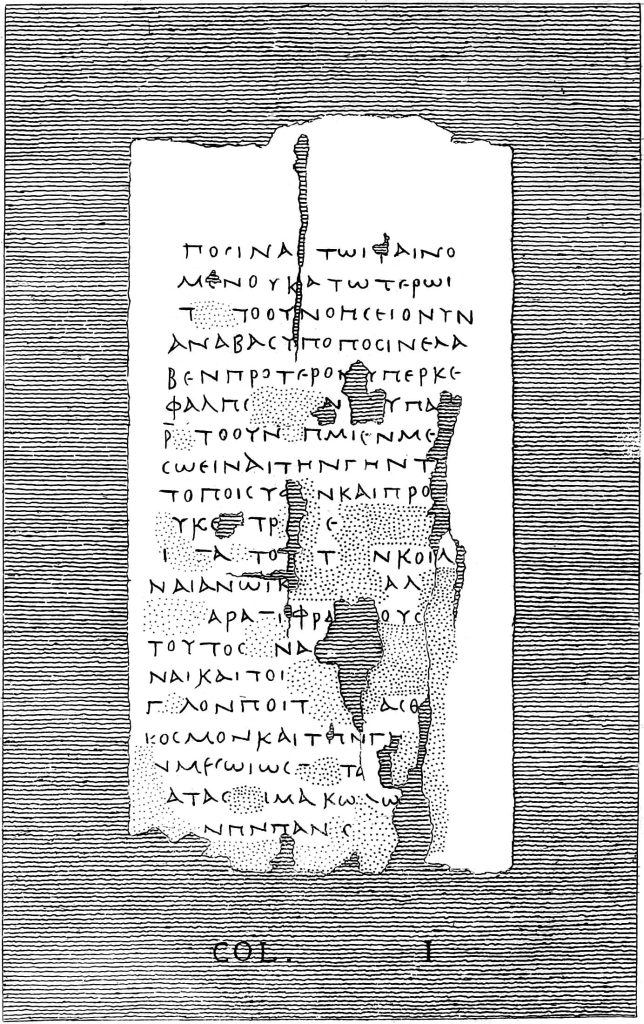
Herculaneum papyrus part. Photo: Public Domain

“A key innovation was the multidisciplinary way we worked on these texts, bringing them under the spotlights of Latinists, linguists, historians – of Classicists, in general,” explains PLATINUM project coordinator Maria Chiara Scappaticcio from the University of Naples Federico II in Italy.


📣 Our WhatsApp channel is now LIVE! Stay up-to-date with the latest news and updates, just click here to follow us on WhatsApp and never miss a thing!!


This work was pulled together to produce the Corpus of Latin Texts on Papyrus, six volumes of which will shortly be published by Cambridge University Press. “This is the major output of the project,” adds Scappaticcio.

“This work collects all the texts of interest, and offers scholars a reference source and tool. Its importance is clear when one compares what we knew about Latin papyri before PLATINUM, and what we know today.”

Groundbreaking linguistic findings

Several interesting findings were made in the course of the project. These include the startling discovery of Seneca the Elder’s Histories. “None of us could have imagined that such an important work would be found in one of the charred papyri from Herculaneum,” says Scappaticcio. “A new chapter in Latin literature has been rewritten thanks to PLATINUM.”
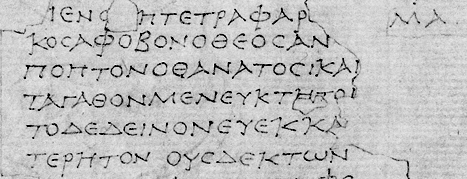
Part of Herculaneum Papyrus 1005. Photo: Public Domain

In addition, many previously unknown texts are now circulating among scholars as a result of the project’s work. The team has helped to forge new partnerships and exchanges between academic and cultural institutions.

“We also discovered the only known Latino-Arabic papyrus,” remarks Scappaticcio. “In this text, the Arabic language has been transliterated in Latin script. This text is unique and provides evidence of interactions between Latin language and culture, and Arabic language and culture in the early medieval Mediterranean.”

Cultural interactions uncovered

The PLATINUM project has helped to shine new light on the spread of Latin, especially in the provinces of the Late Antique Roman Empire.

Careful examination of the actual books, tools and materials that were circulating at the time has provided insights into, for example, how Latin was taught as a foreign language.

“We know now that Latin literature was circulating in the Eastern Roman Empire, and how this literature might have shaped knowledge,” notes Scappaticcio. “One of the main reasons for learning Latin, for example, was the necessity of familiarising oneself with Roman law.”

Scappaticcio believes that this research will benefit not only ancient historians and classical philologists, literates and linguists, but also cultural historians. “The work has opened the door to better understanding cultural interactions at the time,” she says.

“The work of PLATINUM touches on Roman Orientalism, as an aspect of multiculturalism in Antiquity and Late Antiquity.”

Doi: 10.3030/636983

CORDİS

Cover Photo: Carbonized paper, found with other images in an 1858 published book by Giacomo Castrucci.
Related Articles

46 Eagles in vivid color revealed on Ancient Egyptian temple ceiling

15 May 2022

15 May 2022

A joint German/Egyptian archaeological mission at the Temple of Esna on the west bank of the Nile, 35 miles south...

Rare Ancient Stamps Found in Falster May Show Way to an Unknown King’s Home

27 July 2023

27 July 2023

In the center of Falster, southeast of Denmark, a man with a metal detector has made an important discovery. The...

Ancient Well Dating Back to 7th Century AD Discovered on Failaka Island

18 March 2025

18 March 2025

An ancient well, dating back to the pre-Islamic and early Islamic periods, has been discovered on Failaka Island, providing valuable...

73 intact Wari mummy bundles and Carved Masks Placed On False Heads Discovered In Peru

1 December 2023

1 December 2023

At Pachacámac, an archaeological site southeast of Lima in Peru, archaeologists unearthed bundles of 73 intact mummy bundles, some containing...

3,000-Year-Old Cave Paintings Discovered in Itatiaia National Park in Rio de Janeiro, Brazil

13 April 2025

13 April 2025

In a stunning revelation, a dedicated team of researchers from the National Museum, in collaboration with the Federal University of...

Archaeologists discover a well-planned new urban precinct in the Egyptian settlement of Marea

2 August 2021

2 August 2021

Archaeologists excavating the ancient port settlement and cemetery of Marea in Egypt have revealed that a significant part of the...

A bronze seal matrix of St George slaying the dragon has been discovered at the royal Château of Villers-Cotterêts in northern France

21 March 2022

21 March 2022

A previously unpublished and unknown bronze seal matrix of Saint George slaying the dragon has been discovered at the royal...

2,000-Year-Old Wooden Roman Bridge Discovered in Aegerten, Bern, Switzerland

3 September 2025

3 September 2025

Archaeologists in Switzerland have uncovered the remains of a 2,000-year-old wooden Roman bridge during construction work in Aegerten, a municipality...

Iraqis Disliked El Nouri Mosque’s Restoration Plan

18 April 2021

18 April 2021

UNESCO recently announced that the El Nouri mosque, which was bombed by ISIL(The Islamic State of Iraq and the Levant),...

An Anthropologist’s life work uncovers the first ancient DNA from the Swahili Civilization

2 April 2023

2 April 2023

Chapurukha Kusimba, an anthropologist at the University of South Florida, has uncovered the first ancient DNA from the Swahili Civilization,...

The World’s Oldest Mummies “Chile’s Ancient Mummies Older than Egypt’s”

20 February 2024

20 February 2024

At the beginning of the 20th century, mummies dating back 2000 years before the Egyptians were found in the Atacama...

Kashmir’s Forgotten Temple? Shivlings and Ancient Idols Found Beneath Sacred Spring

4 August 2025

4 August 2025

A routine restoration of the Karkoot Nag spring in the Salia area of Aishmuqam, Anantnag district, Jammu & Kashmir, has...

Denmark King’s spice cabinet discovered on Gribshunden

13 February 2023

13 February 2023

The Gribshunden, a 15th-century Danish royal warship, was uncovered to have been loaded with botanical materials, including the first archaeological...

7,800-year-old female figurine discovered in Ulucak Höyük in western Turkey

8 August 2022

8 August 2022

A 7,800-year-old female figurine was found in the Ulucak Höyük (Ulucak Mound) in the Kemalpaşa district of Izmir. It was...

From a “Drunken Hercules” to a Watchful Medusa: Roman Mosaics in Portugal Reveal Myth, Power, and Protection

15 March 2026

15 March 2026

Two remarkable Roman mosaics depicting mythological figures—Hercules and Medusa—are offering fresh insights into artistic traditions and cultural symbolism in Roman...