26 March 2026 The Future is the Product of the Past

A rare 2,500-year-old shipwreck found off the Greek island of Kythera

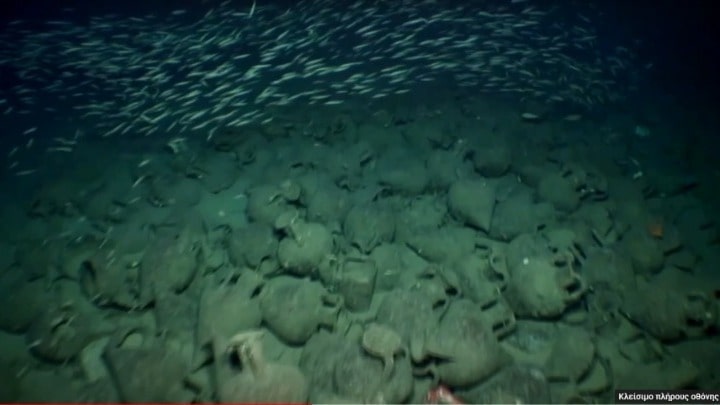
A rare shipwreck from the ancient era was discovered during the maritime survey for the Crete-Peloponnese subsea link.

The Independent Power Transmission Operator (IPTO) announced on Thursday that a rare and unusual shipwreck from the Classical Era was discovered during the maritime survey for the Crete-Peloponnese subsea interconnection.

According to early findings from a study undertaken by the Ephorate of Underwater Antiquities and the Hellenic Center for Marine Research (HCMR) with support from IPTO, the shipwreck, which was discovered at a depth of 222 meters, dates from the late fifth to the mid-fourth century B.C.
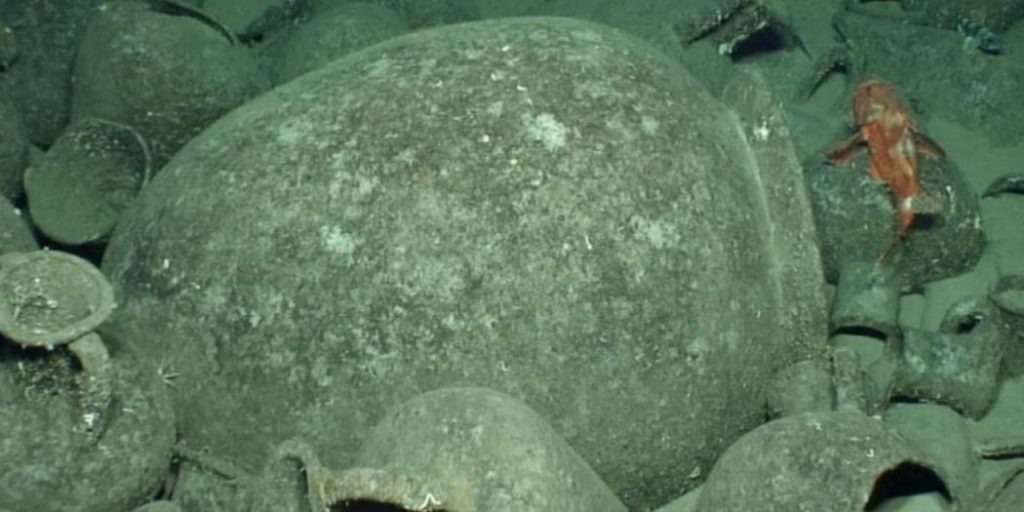
2500-year-old shipwreck

Amphoras from Corfu, Skopelos, and Chios were discovered in the sunken ship’s cargo deck, indicating active commercial activity in the Aegean and Ionian Seas. The completion of the shipwreck’s three-dimensional imaging, which is under underway, is expected to provide an even clearer picture of the vessel’s size and cargo contents.

IPTO has stated its desire to assist feasible initiatives for the gathering and presentation of the finds, at the discretion of the competent authorities, in order for the discovery of the archaeological treasure to be shown and exploited in the best possible way for the benefit of society.


📣 Our WhatsApp channel is now LIVE! Stay up-to-date with the latest news and updates, just click here to follow us on WhatsApp and never miss a thing!!


With this contribution, the Operator reaffirms the public benefit aspect of its projects as well as the multiple advantages these bring to society and the environment, with respect to the history and tradition of the country, IPTO said in its statement.
IPTO

Related Articles

The easternmost Roman aqueduct in Armenia was discovered

19 November 2021

19 November 2021

Archaeologists from the University of Münster and the National Academy of Sciences of the Republic of Armenia have discovered remains...

Celtic Traditions Endured Long After Roman Conquest: Archaeological Research in Saarland Reveals a Hybrid Past

20 September 2025

20 September 2025

Excavations in Oberlöstern uncover burial mounds, villas, and monuments that blend Celtic and Roman traditions—tracing the roots of European identity....

Rare 3,300-Year-Old Faience Mask Unearthed at Dilmun Burial Site in Bahrain

11 January 2026

11 January 2026

Archaeologists in Bahrain have uncovered a rare and enigmatic artifact from the ancient Dilmun civilization: an ornamented pottery head known...

Exciting discoveries at Accana Mound: 3,250-year-old seal belonging to Hittite prince and Akkadian cuneiform texts discovered

19 November 2021

19 November 2021

A 3250-year-old seal of the Hittite prince and a 3400-year-old cuneiform tablet was found in Accana Höyük (Mound) in the...

The first time in Anatolia, a legionnaires’ cemetery belonging to the Roman Empire unearthed

18 November 2022

18 November 2022

In the ancient city of Satala, in the Kelkit district of Gümüşhane in the Eastern Black Sea region of Turkey,...

A Big, Round, 4,000-Year-Old Stone Building Discovered on a Cretan Hilltop

12 June 2024

12 June 2024

During excavations for an airport on Greece’s largest island of Crete, a large circular monument dating back 4000 years was...

Synchrotron Technique Reveals Mysterious Portrait Underneath Renaissance Painting

16 April 2023

16 April 2023

Conservators and curators from the Art Gallery of New South Wales used the Australian Synchrotron’s advanced imaging technique to learn...

Grave Goods Show Gendered Roles for Neolithic Age

16 April 2021

16 April 2021

Grave goods, such as stone tools, have revealed that Neolithic farmers had different work-related activities for men and women. Researchers...

A Roman Sanctuary with Inscriptions Discovered in Cova de les Dones, One of the Largest Rock Art Sites in the Iberian Peninsula

31 January 2025

31 January 2025

A team of researchers from the universities of Alicante (UA) and Zaragoza (Unizar) have discovered a Roman temple at Cova...

Archaeologists uncovered largest Bronze Age burial site of Nitra culture in Czech Republic

19 October 2024

19 October 2024

Archaeologists have uncovered the Nitra culture’s largest Bronze Age burial site near Olomouc in Central Moravia, during their rescue research...

Skeleton Of “Spanish Monk” in Palace of Cortés Turns Out To Be An Aztec Woman

26 January 2024

26 January 2024

Recent research at the Palace of Cortés in Cuernavaca, Mexico, has revealed a grave historical error. For 50 years, it...

What Did Mummies Smell Like in Ancient Egypt? The Surprisingly Pleasant Results Revealed

1 April 2025

1 April 2025

A groundbreaking study led by researchers from University College London’s Institute for Sustainable Heritage and the University of Ljubljana has...

Sensational Discovery in Salzburg: 1,800-Year-Old Roman Ship’s Bow Unearthed During Renovation

11 September 2025

11 September 2025

Archaeologists conducting excavations amid the renovation of the Neue Residenz in Salzburg’s Old Town have discovered a Roman ship’s bow...

Remains of a 12-year-old boy wearing a bronze warrior belt found in Pontecagnano

6 July 2021

6 July 2021

The remains of a 12-year-old boy wearing a bronze warrior belt were found at Pontecagnano, an outpost of the pre-Roman...

Antibiotic bacteria that fight E. coli and other dangerous bugs found in the Roman Baths at Bath in England, “Bath’s waters may really be good for you”

9 June 2024

9 June 2024

The popular Roman Baths in the city of Bath in southwest England are home to a diverse range of microorganisms...