
10 March 2026 The Future is the Product of the Past

2,300-Year-Old Twelve-Legged Terracotta Sarcophagus Unearthed in Southern India

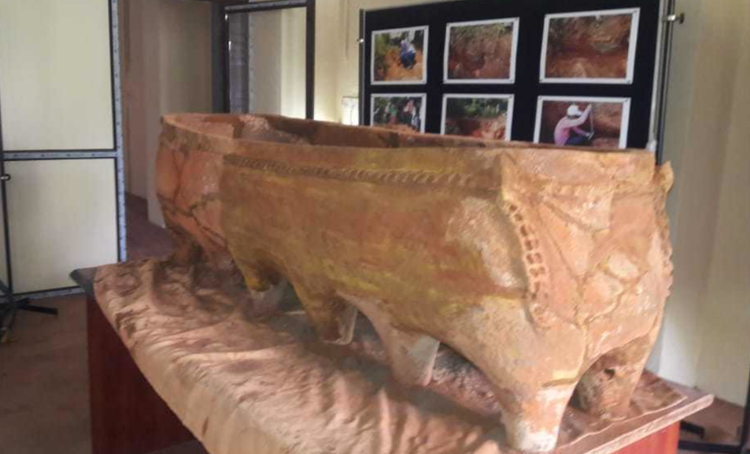
In southern India, archaeologists have uncovered a striking burial structure that is rewriting what we know about early historic cultures in the region. A 2,300-year-old terracotta sarcophagus with twelve legs has been discovered during excavations in Pallavaram, a suburb of Chennai (formerly Madras), in the state of Tamil Nadu.

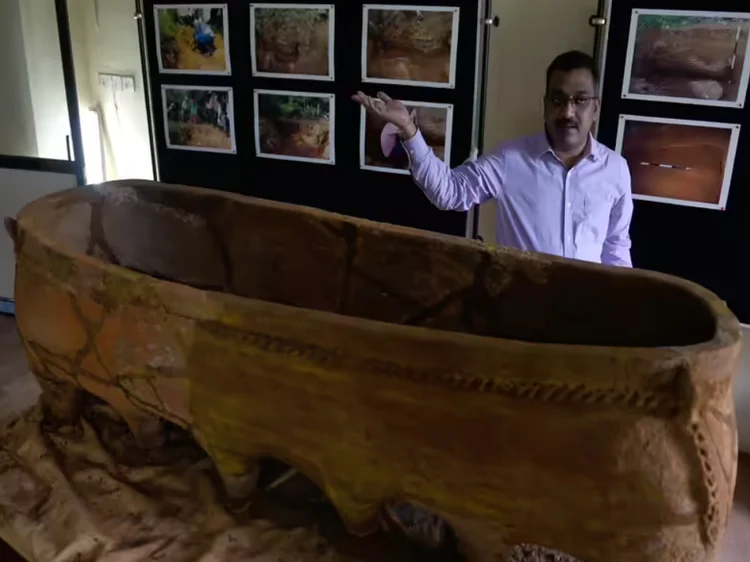
The find was made by the Archaeological Survey of India (ASI) at a depth of approximately two meters below the present ground surface. Measuring roughly 170 centimeters in length, 45 centimeters in width, and about 50 centimeters in depth, the baked clay coffin immediately stood out because of its unusual design: it rests on twelve carefully shaped legs.

According to ASI Superintending Archaeologist Amv Subramanyam, the discovery provides compelling evidence for a megalithic culture flourishing in Pallavaram more than two millennia ago. “This terracotta coffin indicates the presence of a settled community in the 3rd century BCE with the technological capability to produce sophisticated ceramic burial containers,” he explained. The structure’s form and craftsmanship suggest an advanced understanding of both funerary architecture and ceramic production.

The sarcophagus is believed to date to around the 3rd century BCE, a period when southern India was home to complex societies engaged in long-distance trade and regional cultural exchange. The presence of such an elaborately constructed burial container supports the view that the region’s inhabitants were not nomadic but part of an organized and technologically adept community.
Credit: Archaeological Survey of India (ASI)

Interestingly, the site has yielded important discoveries before. About 140 years ago, British archaeologist Alexander Rea uncovered another ancient coffin in the Pallavaram hills, pointing to the area’s long-recognized archaeological significance. However, systematic excavations had been delayed for years due to legal disputes over land ownership, with ASI only resuming work after a court decision cleared the way late last year.


📣 Our WhatsApp channel is now LIVE! Stay up-to-date with the latest news and updates, just click here to follow us on WhatsApp and never miss a thing!!


To determine the coffin’s precise age, ASI plans to conduct thermoluminescence dating. Further analysis may shed light on burial practices, social hierarchy, and material culture in early historic Tamil Nadu.

The discovery not only highlights Pallavaram’s archaeological richness but also underscores the urgent need to preserve the site for future research. As excavations continue, researchers hope this twelve-legged sarcophagus will offer deeper insight into the lives—and deaths—of a little-understood ancient community in southern India.

Cover Image Credit: Archaeological Survey of India (ASI)

Related Articles

A 3800-year-old cylinder seal was discovered at Turkey’s Tepebag Mound excavations

8 July 2022

8 July 2022

In the 2022 excavations of Tepebag Mound, located around Taşköprü, the center of Adana province in Turkey’s Mediterranean Region, a...

2,000-Year-Old Garlanded Sarcophagus Unearthed in City of Gladiators

2 May 2025

2 May 2025

A remarkably well-preserved, 2,000-year-old sarcophagus adorned with intricate garlands has been discovered during ongoing excavations in the ancient city of...

Unique Two-Faced Gold Ring Unearthed in Poland

10 February 2024

10 February 2024

A gold ring with an unusual two-faced design, likely to be from the 11th or 12th century, has been discovered...

2,400-year-old unearthed flush toilet in China

18 February 2023

18 February 2023

According to a China Daily report, the lower parts of a flush toilet estimated to be 2,400 years old have...

Getting to Know Matar Kubilea

8 February 2021

8 February 2021

Hittite state’s, With its collapse in 1200-1190 BC, Anatolia entered a period of drift from holistic to dispersal. (The Hittite...

Ancient Warrior Vessel Discovered at Chankillo, The Oldest Solar Observatory in the Americas

1 September 2025

1 September 2025

Archaeologists have uncovered a fragmented vessel depicting a warrior at Chankillo, the oldest solar observatory in the Americas, located in...

Buried Treasure of Trajan’s Forum: Colossal Marble Head Discovered

23 June 2025

23 June 2025

A remarkable archaeological discovery has emerged from the heart of imperial Rome. During recent excavations on Via Alessandrina—funded by Italy’s...

Mysterious Handprints Found in the Ancient Mayan Cave

1 May 2021

1 May 2021

In Mexico, home to ancient civilizations such as the Maya, Aztec, and Inca, archaeologist Sergio Grosjean found dozens of mysterious...

Monumental Roman complex discovered in France

19 March 2023

19 March 2023

In the city of Reims in northeastern France, archaeologists have discovered an ancient Roman-era monumental complex dating from the 2nd...

Mysterious 1,600-Year-Old Roman-Era Burial Unearthed in Delbrück-Bentfeld, Germany

15 June 2025

15 June 2025

Archaeologists have uncovered a rare and mysterious Roman-era burial in Delbrück-Bentfeld, Germany, revealing a unique glimpse into the region’s ancient...

2,700-year-old bronze figurine found in Germany’s Tollence River: goddess or weight?

9 April 2022

9 April 2022

A Bronze Age female figurine discovered in the Tollense River in northern Germany may have been a goddess, part of...

Ancient Hittite Archives Unearthed at Kayalıpınar: 56 Cuneiform Tablets and 22 Seal Impressions Found

18 September 2025

18 September 2025

Archaeologists excavating the ancient Hittite city of Kayalıpınar (ancient Šamuḫa) in Sivas province have uncovered a remarkable collection of 56...

Urfa Castle Yields Mysterious Rock-Cut Tomb Possibly Tied to Abgar Dynasty—Early Christian Allies of Jesus

5 July 2025

5 July 2025

A recent archaeological breakthrough in southeastern Turkey has stirred excitement in the academic world. Deep within the inner citadel of...

Radiocarbon dating shows that the Roman settlement of Karanis survived in Egypt until the Arab Conquest in the 7th century AD

13 May 2024

13 May 2024

New research results are rewriting the history of Karanis, an ancient Greco-Roman agricultural settlement in the Fayum oasis in Egypt....

A painted Wooden Saddle Discovered in an Ancient Tomb in Mongolia Represents Earliest Evidence of Modern Horse Riding

13 December 2023

13 December 2023

Researchers unearthed a wooden saddle framed with iron stirrups in a tomb in Urd Ulaan Uneet, popularly known as the...