
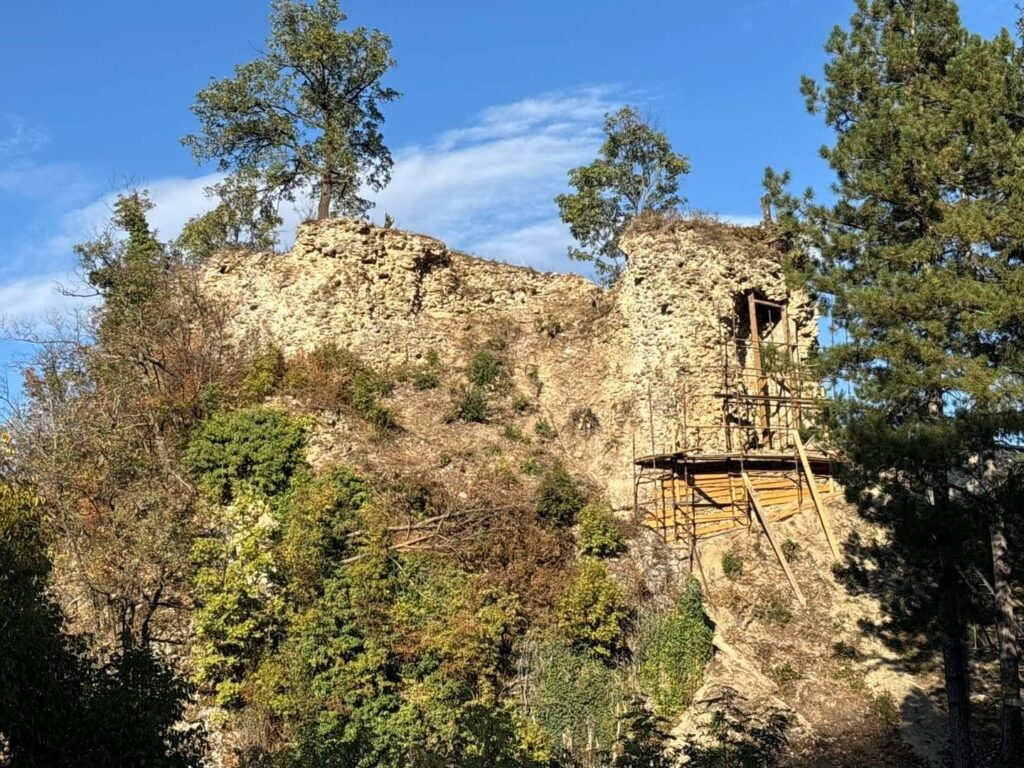
Archaeologists investigating a medieval fortress in northeastern Bosnia and Herzegovina have discovered a previously unknown water cistern at the top of a defensive tower. The find is helping researchers reconstruct the layout of Teočak Fortress, where successive excavations have revealed forgotten rooms, substantial fortification walls, and traces of life across centuries of political change.
Perched above the surrounding landscape, Teočak Fortress once guarded a strategic position in a region contested by medieval rulers and later incorporated into the Ottoman Empire. Over time, parts of the fortress collapsed or became covered by vegetation, making it difficult to determine how the stronghold was originally organized.
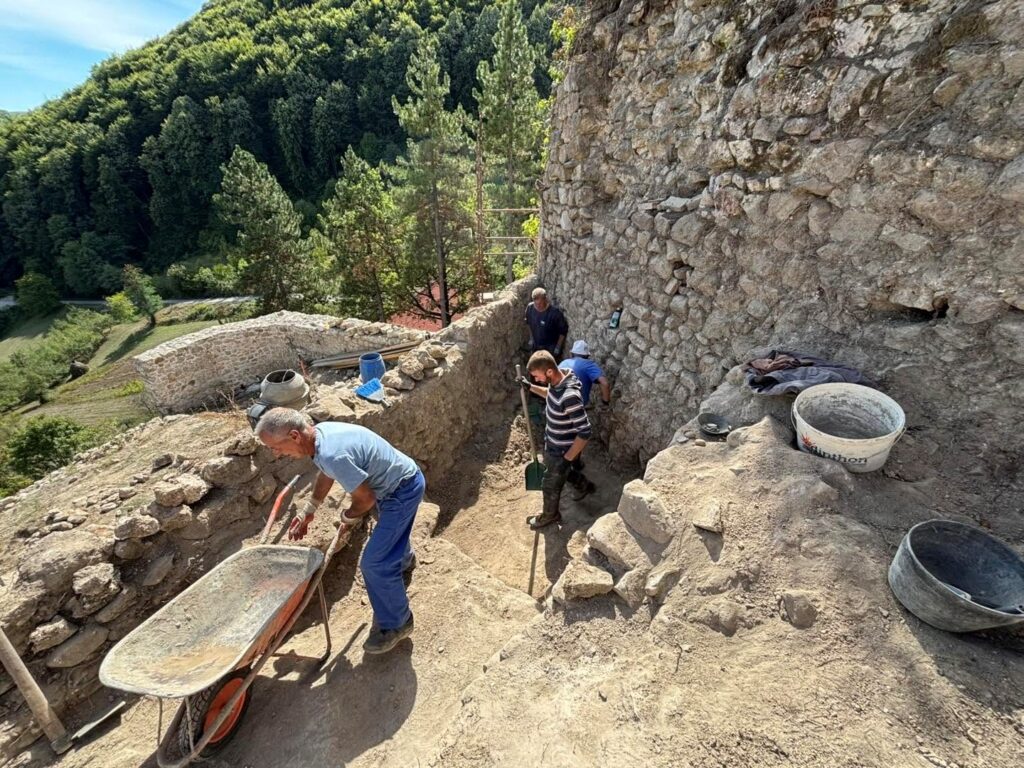
During the third phase of systematic excavations, archaeologists identified a water-storage structure on the southern tower and documented additional sections of the fortress’s defensive architecture.
A Water Cistern on the Southern Tower
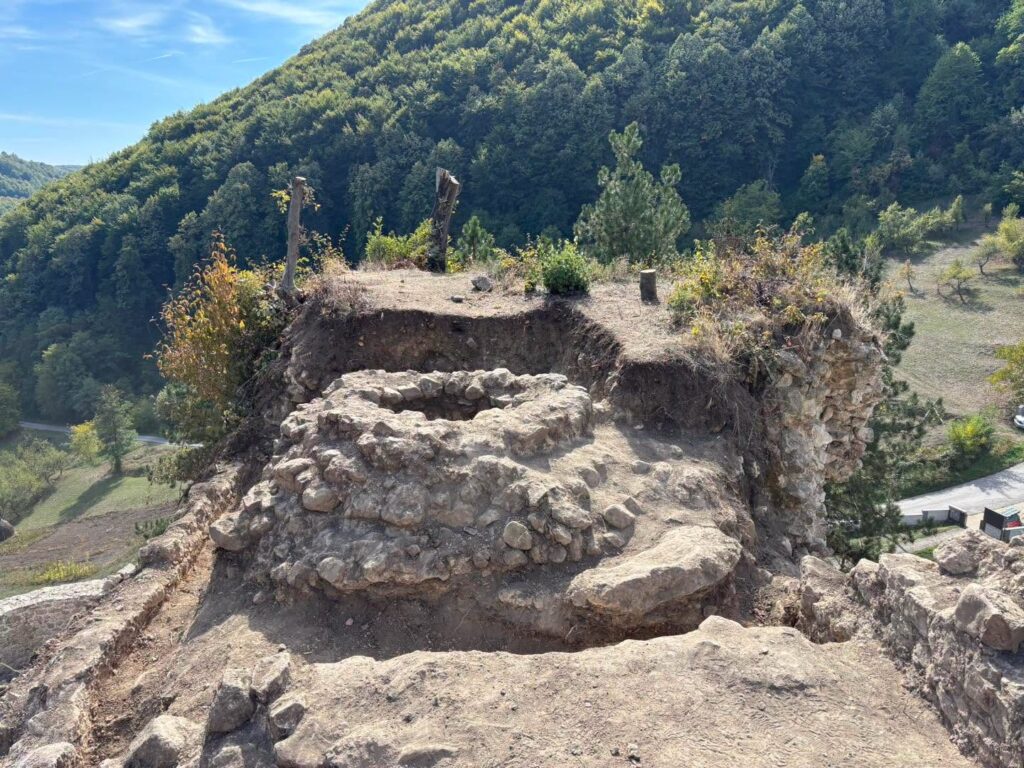
The most notable discovery is a cistern, locally known as a čatrnja, found at the top of the fortress’s southern tower. Its location provides new evidence of how water storage was incorporated into the fortress’s defensive architecture.
Water storage was essential to the operation of a fortress, especially when access to external supplies became difficult. Placing a cistern within the fortified complex would have provided a protected reserve for people occupying the site, although archaeologists have not yet established precisely how the Teočak structure collected its water.
The discovery also raises questions about the relationship between the southern tower and the rest of the fortress. Was the water supply intended primarily for the tower’s occupants, or did it serve a larger section of the complex? Further architectural investigation may help clarify how the structure was integrated into the site’s defensive and domestic arrangements.
Researchers have not yet published the cistern’s dimensions, storage capacity, or precise construction date. Its identification nevertheless adds an important functional element to the emerging reconstruction of the medieval stronghold.
Reconstructing a Fortress Hidden Beneath the Ruins
The water cistern is only one part of a much larger archaeological investigation. Since systematic excavations began in 2024, researchers have identified a substantial hall and a network of rooms that were previously unknown, challenging earlier assumptions about the fortress’s internal organization.
The latest excavation campaign has provided additional evidence of its complex architecture. Archaeologists documented fortification walls and masonry extending toward the central plateau, improving their understanding of how different parts of the stronghold were connected.
Together, these findings are beginning to reveal a more complicated structure than the surviving ruins originally suggested. The hall and rooms provide evidence of enclosed spaces, while the walls help define the fortress’s boundaries and internal divisions. The newly identified cistern adds the practical question of water supply to this developing architectural picture.
The research therefore goes beyond recovering isolated medieval objects. By examining the relationship between towers, defensive walls, rooms, and water-storage facilities, archaeologists are gradually reconstructing how the fortress may have operated as an integrated complex.
Weapons, Pottery, and Traces of Everyday Life
Excavations also produced a collection of portable archaeological finds, including pottery fragments, arrowheads, a spearhead, tools, granite stone spheres, and fragments of carved architectural stone.
These objects offer different kinds of evidence about the fortress’s past. Weapon components reflect its military character, while pottery and tools may provide information about activities carried out within the walls. Architectural fragments could also help researchers investigate how parts of the complex were constructed and decorated.
The finds will undergo further specialist examination and documentation. For now, the excavation authority has not provided detailed dates or interpretations for individual objects, making it premature to assign them to particular military events or periods of occupation.
From Medieval Rulers to Ottoman Control
Teočak first appears in surviving written records in 1432, although its earliest construction phase has not yet been firmly established. Its history is associated with the late medieval period and subsequent Ottoman rule, a sequence also reflected in archaeological material recovered at the site.
Between 1471 and 1477, the fortress was controlled by Nikola Iločki, also known as Nicholas of Ilok, a prominent nobleman connected with the Kingdom of Hungary. During the first half of the 16th century, Teočak became part of the Ottoman Empire, entering another chapter of its long history.
The fortress is believed to have been abandoned during the first half of the 19th century. Over time, sections of its towers and walls deteriorated, obscuring the architectural arrangement that archaeologists are now working to document.
This long history makes the newly discovered structures especially significant, but it also creates a dating challenge. Without further analysis, researchers cannot yet determine whether the cistern belongs to the fortress’s late medieval occupation, its Ottoman period, or a later alteration.
Preserving Teočak’s Forgotten Architecture
The excavations form part of a wider revitalization project coordinated by Tuzla Canton’s heritage protection institute. The research is directed by archaeologist Edin Bujak of the University of Sarajevo, with specialists from Bosnian institutions and colleagues from Slovenia, Serbia, and Poland participating in the fieldwork.
Following the latest excavation campaign, conservation and restoration work is planned for the southern tower. Protecting the surviving masonry will be an important step in preserving both the newly identified cistern and the architectural evidence surrounding it.
Tuzla Canton Institute for the Protection of Cultural, Historical and Natural Heritage
