10 June 2026 The Future is the Product of the Past

Turkish researchers use Artificial Intelligence to read cuneatic Hittite tablets

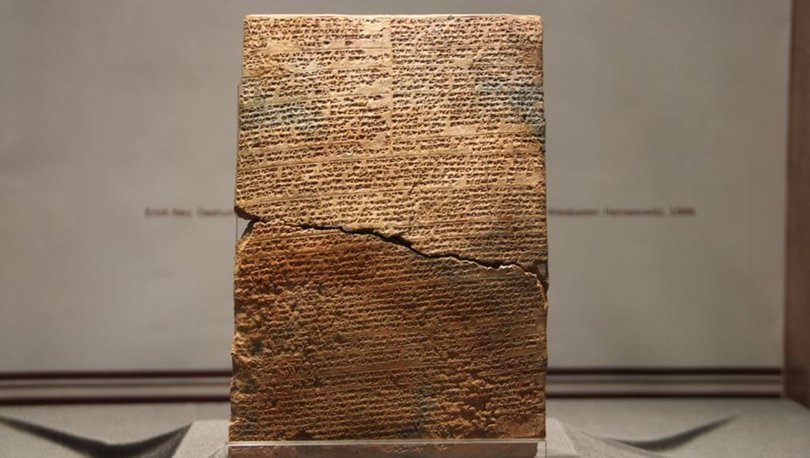
Thanks to a project implemented in Türkiye, 1,954 ancient Hittite tablets are being read for the first time using artificial intelligence (AI).

The project’s initial phase, which involved reading, scanning, and digitizing Hittite cuneiform tablets kept in the collections of the Çorum Museum, the Istanbul Archaeology Museum, and the Ankara Anatolian Civilizations Museum, has been finished.

This outstanding project will aid researchers in quickly and easily analyzing ancient documents, speeding up the process of decipherment within the framework of the project run in collaboration with Ankara University and the General Directorate of Cultural Heritage and Museums.

500 Hittite cuneiform tablets were translated at the start of the project by photographing them in high resolution and scanning them with 3D technology. According to the results of the testing, the AI’s success rate was 75.66%.

The data obtained from the deciphered tablets will be shared with the scientific world by Hittitologists. Also, the public will be able to view the cuneiform clay tablets once the translation phase is finished in the soon-to-be-opened Hittite Digital Library.


📣 Our WhatsApp channel is now LIVE! Stay up-to-date with the latest news and updates, just click here to follow us on WhatsApp and never miss a thing!!


Ankara University researcher and project coordinator Özlem Sir Gavaz emphasized that the project is the first of its kind in the world and said: “It has a great meaning that Boğazkale tablets were discovered in Çorum. We initiated such a project for the first time in the world to read Hittite tablets with AI. Were there any examples before? Yes. In Chicago, Toronto and Tel Aviv University. Those directly related to AI were on the Babylonian and Akkadian tablets. There was no project to digitize Hittite tablets and then integrate them with AI. Therefore. We are quite proud of it.”
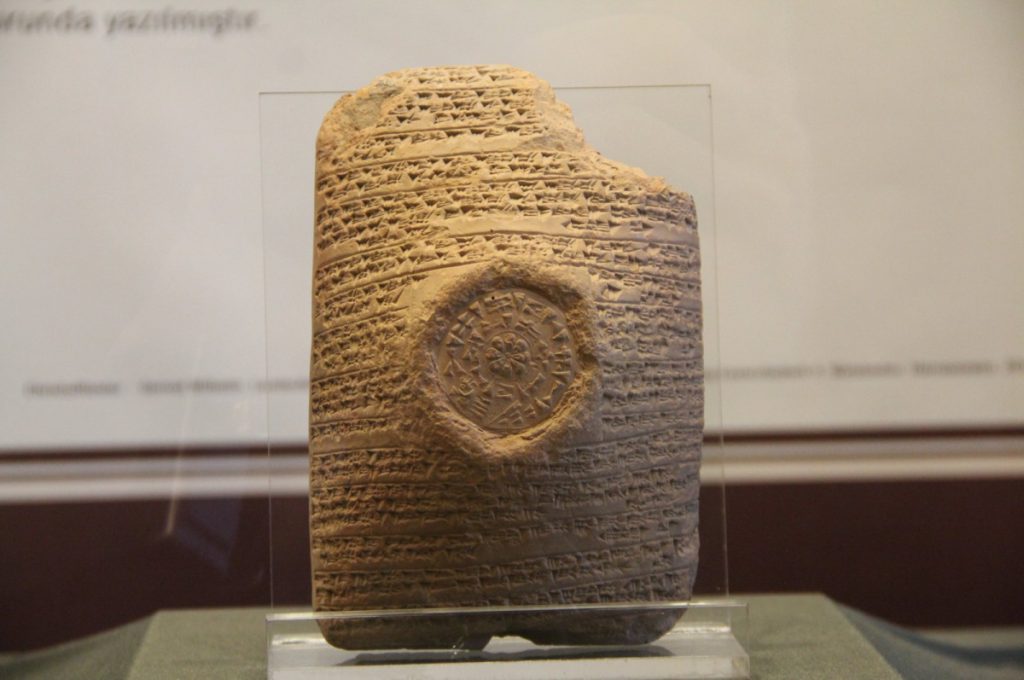
One of the clay tablet displayed in the, Çorum, Türkiye. Photo: İHA

The project, called “3D Scanning of Cuneiform Tablets in the Museum of Anatolian Civilizations and Reading Boğazköy Tablets with AI,” is also supported by the Ministry of Culture and Tourism, Ankara University and the Cultural Heritage and Museums.

Project coordinator Gavaz also explained that they tried to decipher the Hittite language manually, but this method proceeds more slowly and is prone to errors, while AI works in a shorter time and with a low margin of error.

Zeynel Karacagil, another coordinator of the project, explained that the project has two main pillars, the first of which is the digitization of the Hittite cuneiform tablets and the second is the process of reading them with AI.

Explaining that they started the AI process with 1,954 high-resolution photographs, Karacagil said: “In the first phase, the reading of the tablets was planned on 500 of them. There are some situations when AI captured some characters with 95% success while some of them were 50%. The fact that some tablets are broken or deformed and other factors have an effect on the results. But we are trying to solve high-resolution photos with different algorithms. The rate of 75.66% in the first phase is a great success for the academic community and our country. It is the first time that cuneiforms in Hittite have been translated in this manner. It is a source of pride for us to achieve such success for the first time with our local and national researchers. We are also breaking the perception that only foreigners can work in the field of AI.”

He also expressed that they have created 3D scans of the tablets and digital archives within the scope of the project and that they are planning to enable AI to read more tablets in the future. Currently, with approximately 2.5 million point shots, 86 of the tablets have been scanned in this respect.
Related Articles

Sumatran fishing crews may have found the legendary Gold Island in the Mud of the Indonesian River

24 October 2021

24 October 2021

The site of the Srivijaya kingdom, known in ancient times as the Island of Gold, may have been found by...

One of the Largest Prehistoric Burial Grounds Ever Found in Bavaria Unearthed During Power Line Work

11 September 2025

11 September 2025

Archaeologists call the discovery a “sensation” as 22 prehistoric skeletons and rare artifacts are uncovered near Regensburg. Archaeologists in Bavaria...

Archaeologists Rediscover Alexandria on the Tigris, a Lost City Founded by Alexander the Great

31 January 2026

31 January 2026

For centuries, one of the most important cities of the ancient world lay hidden beneath dust, war zones, and shifting...

4500-year-old tiger-patterned ritual weapon uncover in east China

4 April 2023

4 April 2023

Archaeologists discovered an extremely rare stone relic, an axe-shaped weapon used for rituals in ancient China, engraved with a tiger...

Roman mosaic found under the pavement in the narrow streets of Hvar

13 February 2022

13 February 2022

In the Old Town on the Adriatic island of Hvar, Croatia, a Roman mosaic was unearthed beneath a narrow street....

1st Century BCE Medusa Mask Mold Discovered in Ancient Finziade, Sicily

24 January 2025

24 January 2025

At the Finziade archaeological site in the Sicilian town of Licata, archaeologists have discovered a mask mold that could represent...

The Lost Troy of Roman Britain: How a Chance Discovery in Rutland Unlocked an Ancient Story Forgotten for 1,500 Years

7 December 2025

7 December 2025

A lost Aeschylean version of the Trojan War emerges from the Rutland mosaic, revealing Roman Britain’s surprising cultural ties to...

Medieval Pottery Workshop Discovered in Rural Switzerland Challenges Long-Held Assumptions

19 April 2026

19 April 2026

A quiet construction site in northern Switzerland has led to a discovery that is subtly reshaping how historians understand medieval...

Unique 6,000-Year-Old Sacred Hearths and Karaz Pottery Discovered at Tadım Mound in Elazığ

28 March 2025

28 March 2025

Archaeological excavations at Tadım Castle and Tadım Mound (Tadım Höyük), located within the borders of Tadım Village in Elazığ, continue...

Discovery of Tang Dynasty Tomb Reveals Stunning Gold and Silver Artifacts in China’s Ancient Capital

8 January 2026

8 January 2026

Archaeologists in northwest China have uncovered a remarkably well-preserved Tang Dynasty tomb containing rare gold, silver, bronze, and ceramic artifacts,...

Bronze Age Burials in Iran Reveal Hidden Links to the Mysterious BMAC Civilization

13 March 2026

13 March 2026

Archaeologists working in northeastern Iran have uncovered a remarkable Bronze Age settlement that is offering new insights into ancient cultural...

A Previously Unknown Bronze Age Settlement Discovered in Switzerland

18 February 2024

18 February 2024

In advance of a construction project in Heimberg, the Archaeological Service of the Canton of Bern carried out a rescue...

2,000-Year-Old Wooden Roman Bridge Discovered in Aegerten, Bern, Switzerland

3 September 2025

3 September 2025

Archaeologists in Switzerland have uncovered the remains of a 2,000-year-old wooden Roman bridge during construction work in Aegerten, a municipality...

1600-Year-Old Rare Roman Glass Diatreta with Gladiator Scene Unearthed in Doclea, Montenegro

13 June 2025

13 June 2025

An extraordinary archaeological discovery has been made in the ancient Roman city of Doclea, located near Podgorica, Montenegro. During recent...

Roman-era Pottery Workshop discovered in Alexandria

29 April 2022

29 April 2022

The Egyptian archaeological mission discovered a Roman-era pottery workshop at the site of Tibet Mutawah, west of Alexandria. The researchers...