Karnak Temple, one of ancient Egypt’s most iconic sacred sites, may have been deliberately built on land that literally emerged from water—transforming a powerful creation myth into monumental architecture, according to groundbreaking new research.
An international team of researchers led by Uppsala University has completed the most comprehensive geoarchaeological study ever conducted at the Karnak Temple complex in Luxor, Egypt. Their findings, published in the journal Antiquity, reveal that the temple was constructed on a rare island of high ground formed by shifting Nile River channels—an environment that strikingly mirrors ancient Egyptian creation beliefs.
Karnak, part of a UNESCO World Heritage Site, is among the largest temple complexes ever built. For over 3,000 years, it served as a religious heart of ancient Egypt. Now, scientists suggest that its very location may have been chosen not only for practical reasons, but for its profound symbolic and cosmological significance.
A Temple Born From a Changing River Landscape
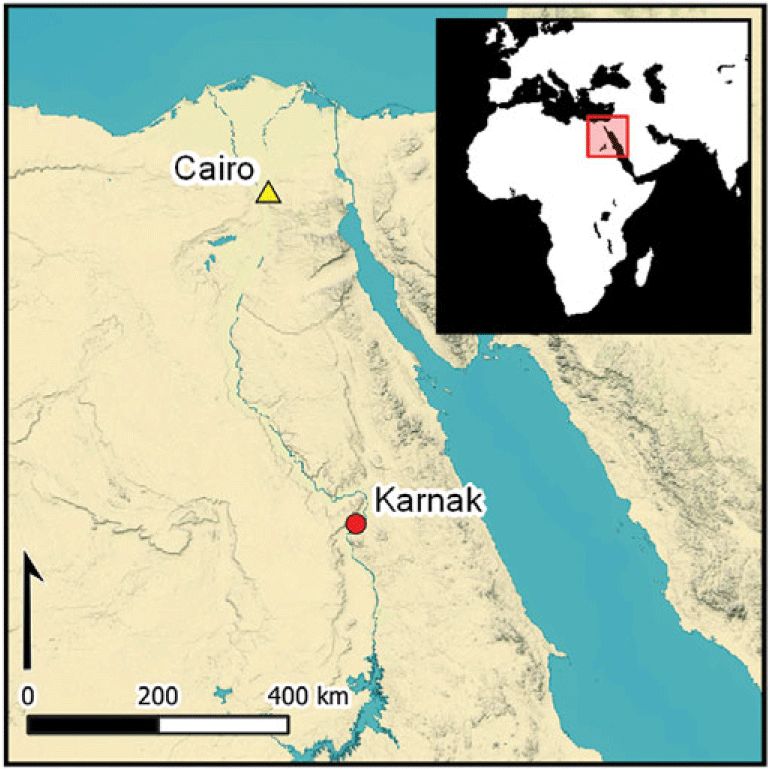
Today, Karnak Temple lies about 500 meters east of the Nile River, within the modern city of Luxor—ancient Thebes, once Egypt’s religious capital. Thousands of years ago, however, the surrounding landscape was vastly different.
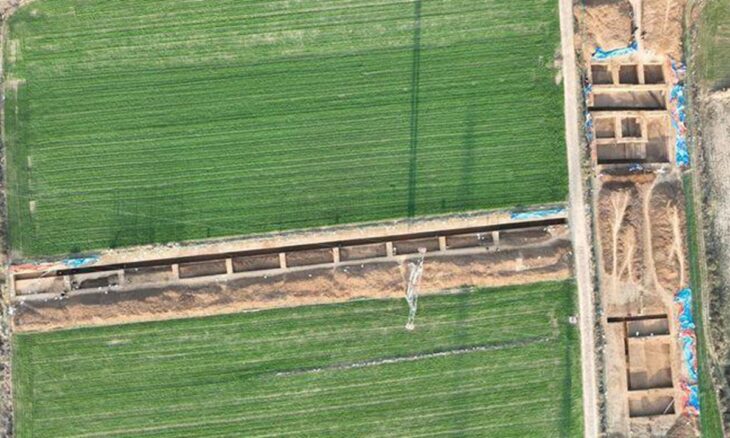
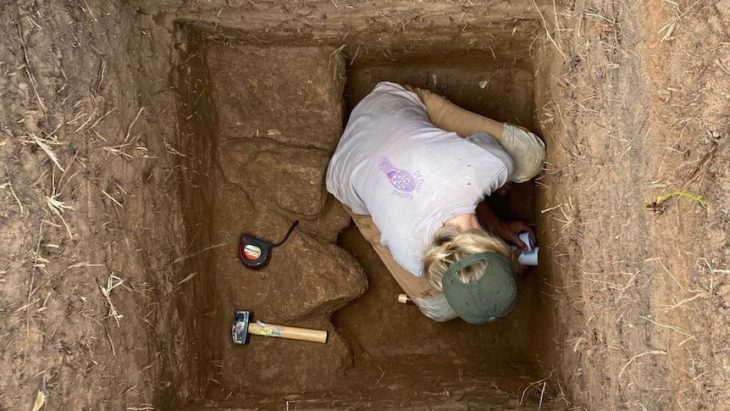
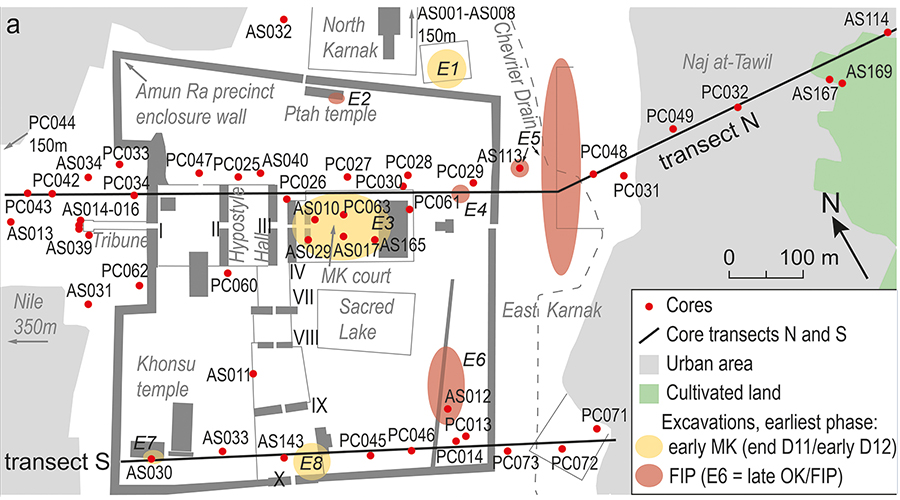
To reconstruct this ancient environment, researchers analyzed 61 sediment cores drilled from inside and around the temple precinct, along with tens of thousands of ceramic fragments. This extensive dataset allowed the team to trace long-term changes in land formation, river channels, and human activity.
📣 Our WhatsApp channel is now LIVE! Stay up-to-date with the latest news and updates, just click here to follow us on WhatsApp and never miss a thing!!
“Our research presents the clearest understanding yet of the landscape upon which the ancient Egyptians founded their temple at Karnak approximately 4,000 years ago,” said Dr. Angus Graham of Uppsala University, who led the study.
The results show that before around 2520 BCE, the Karnak area was regularly inundated by fast-moving Nile floodwaters. These conditions would have made permanent settlement impossible. The earliest signs of human activity date to the Old Kingdom period, supported by pottery fragments from approximately 2305 to 1980 BCE.
How Land Literally Emerged From Water
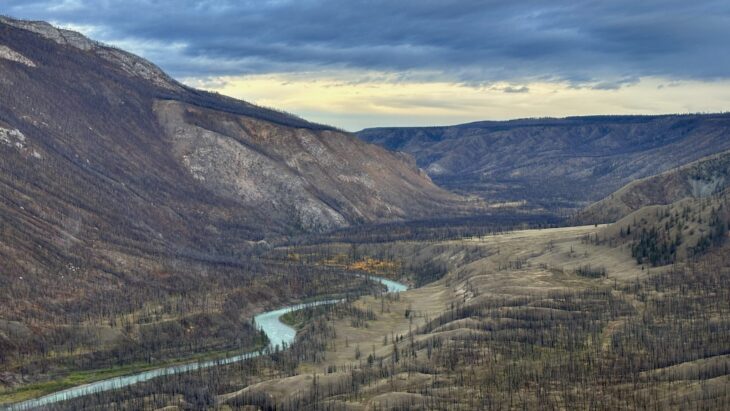
The study reveals that Karnak was built on a naturally elevated terrace that formed when Nile river channels carved paths on both its eastern and western sides. This process created a rare island of stable, high ground surrounded by water—an anomaly in an otherwise flood-prone region.
This elevated “island” provided a secure foundation for early settlement and the initial phases of temple construction. As centuries passed, the river channels gradually shifted, exposing more land and enabling Karnak to expand into the vast architectural complex visible today.
One of the most surprising discoveries involved the eastern river channel, which had previously received little scholarly attention.
“What surprised us most was the clarity and longevity of this eastern channel,” Dr. Graham explained. “It remained active until the Roman period, and we found evidence that ancient Egyptians deliberately filled parts of it with desert sand—likely to speed up temple expansion.”
Echoes of an Ancient Creation Myth
Perhaps the most compelling aspect of the research lies in its connection to ancient Egyptian cosmology.
According to Egyptian creation myths, the world began when a primeval mound of land rose from chaotic waters, known as Nun. Early texts describe the creator god emerging from this watery abyss, standing upon the first solid ground.
The reconstructed landscape beneath Karnak closely matches these descriptions. The island identified by researchers is the only known example in the Theban region of naturally high ground completely encircled by water.
“It’s tempting to suggest that Theban elites deliberately chose Karnak as the dwelling place of a new form of the creator god, Ra-Amun, precisely because the landscape embodied the cosmogonical scene of land rising from water,” said Dr. Ben Pennington, lead author of the study and Visiting Fellow in Geoarchaeology at the University of Southampton.
Later Middle Kingdom texts (c. 1980–1760 BCE) reinforce this symbolism, describing the primeval mound rising from the “Waters of Chaos.” Each year, as Nile floodwaters receded, the elevated ground at Karnak would have appeared to grow—visually reenacting the creation myth before worshippers’ eyes.
Climate Change and Human Engineering
The study also connects Karnak’s history to broader environmental changes in the Nile Valley. It builds on earlier research published in Nature Geoscience in 2024, which documented how climate shifts over the last 11,500 years reshaped Egypt’s river systems and landscapes.
Together, these findings show that ancient Egyptians were not passive observers of nature. Instead, they actively engineered their environment, adapting religious architecture to a dynamic riversystem while embedding powerful symbolic meanings into the landscape itself.
The research was conducted under the auspices of the Egypt Exploration Society with permission from Egypt’s Ministry of Tourism and Antiquities, highlighting ongoing international collaboration in uncovering Egypt’s deep past.
A Monument Where Myth Meets Earth
The new findings suggest that Karnak Temple is more than a masterpiece of stone—it is a material expression of belief, where geology, climate, and mythology converge.
In choosing a site where land literally rose from water, ancient Egyptians may have turned one of their most sacred creation stories into enduring reality—one that still stands on the banks of the Nile today.
Benjamin Thomas Pennington, Angus Graham, Aurélia Masson-Berghoff, Marie Millet, Jan Peeters, Willem H.J. Toonen, Timotheus G. Winkels, Luke H. Sollars, Virginia L. Emery, Kristian David Strutt, Dominic Simon Barker. Conceptual origins and geomorphic evolution of the temple of Amun-Ra at Karnak (Luxor, Egypt). Antiquity, 2025; 99 (408): 1535 DOI: 10.15184/aqy.2025.10185
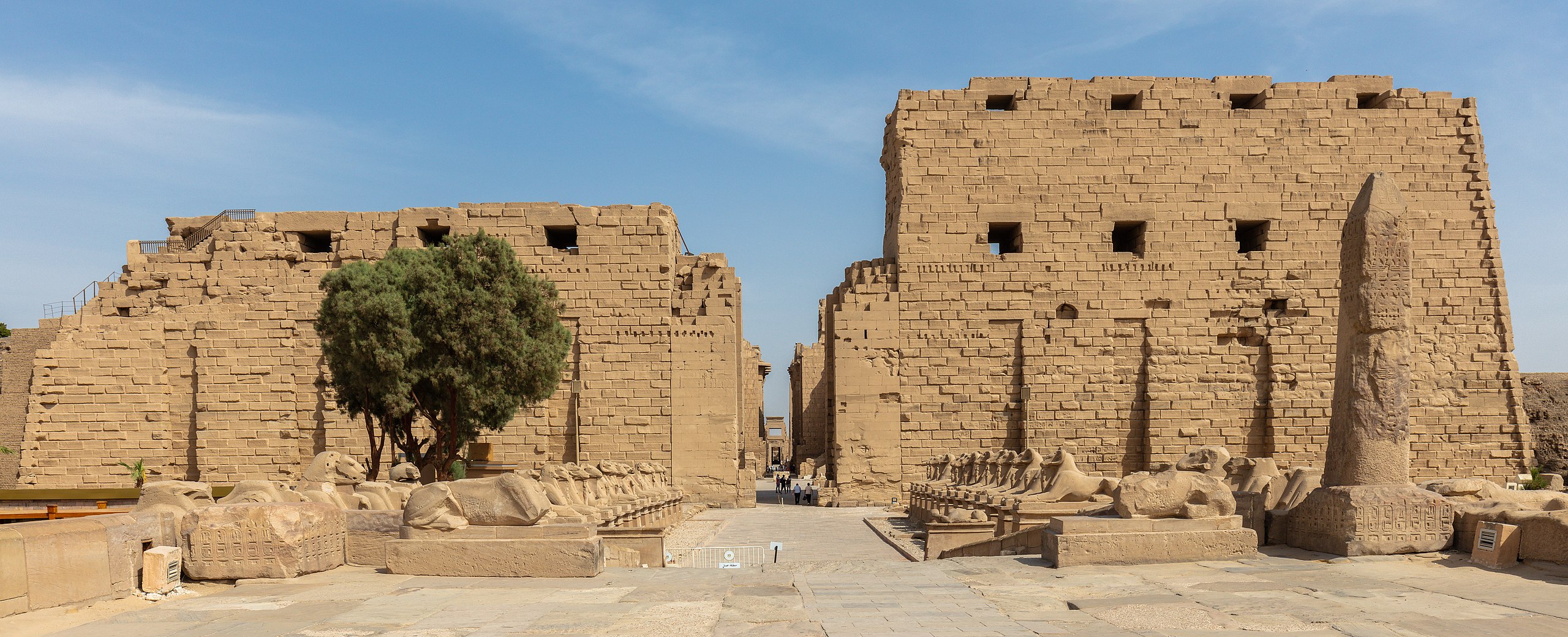
Cover Image Credit: View of the first pylon of the temple of Amun-Re at Karnak. Public Domain – Wikipedia Commons