
Archaeologists in Sudan have identified a 2,700-year-old workshop where ancient craftspeople produced colorful ornaments and funerary figurines for the Kingdom of Kush. The discovery provides new evidence linking temple-based manufacturing to royal burials and offers a rare glimpse into how Kushite rulers controlled valuable goods, skilled labor, and resources from distant regions.
Behind the remains of an ancient temple in Sudan, archaeologists have found traces of an industry that once supplied objects for the kingdom’s most powerful people. Among the discoveries are firing pits, hundreds of colorful beads, production waste, and a small green funerary figurine that connects the workshop to the royal tombs of ancient Nubia.
The workshop stood beside Sanam Temple at Napata, one of the most important political and religious centers of the Kingdom of Kush. Dating to around the middle of the seventh century BCE, it provides the first securely identified evidence of faience manufacturing from the Middle Napatan period. Researchers believe the workshop operated under temple supervision and helped produce objects reserved for Kushite royalty.
The findings appear in the journal Antiquity in a study by Rennan Lemos, Kathryn Howley, Siobhan Shinn, and Shadia Abdu Rabo. Their research combines discoveries from excavations conducted between 2018 and 2020 with archaeological material recovered more than a century earlier.
A Workshop Behind King Taharqo’s Temple
The story begins at Sanam Temple, which King Taharqo built during his reign around 690–664 BCE. Taharqo belonged to the Kushite dynasty that ruled both Nubia and Egypt during Egypt’s Twenty-fifth Dynasty. His extensive building program included temples and monuments across the Nile Valley, reflecting the political and religious importance of his kingdom.
Dedicated to a local form of the god Amun, Sanam Temple formed part of Napata’s administrative and ceremonial landscape. Nearby stood a building interpreted as a royal treasury, where excavations previously identified imported storage jars, valuable raw materials, and finely crafted goods. The surrounding area also contained extensive cemeteries, indicating that Sanam served a population extending beyond the royal court.
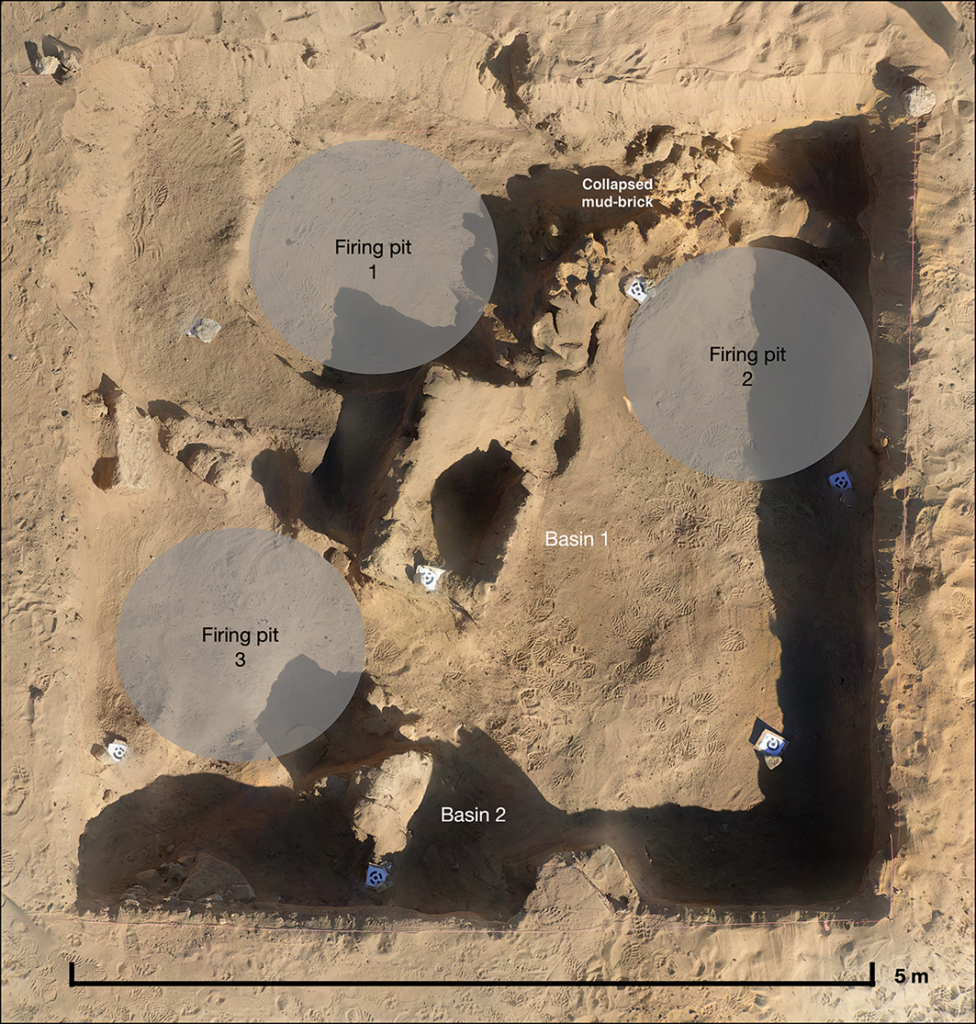
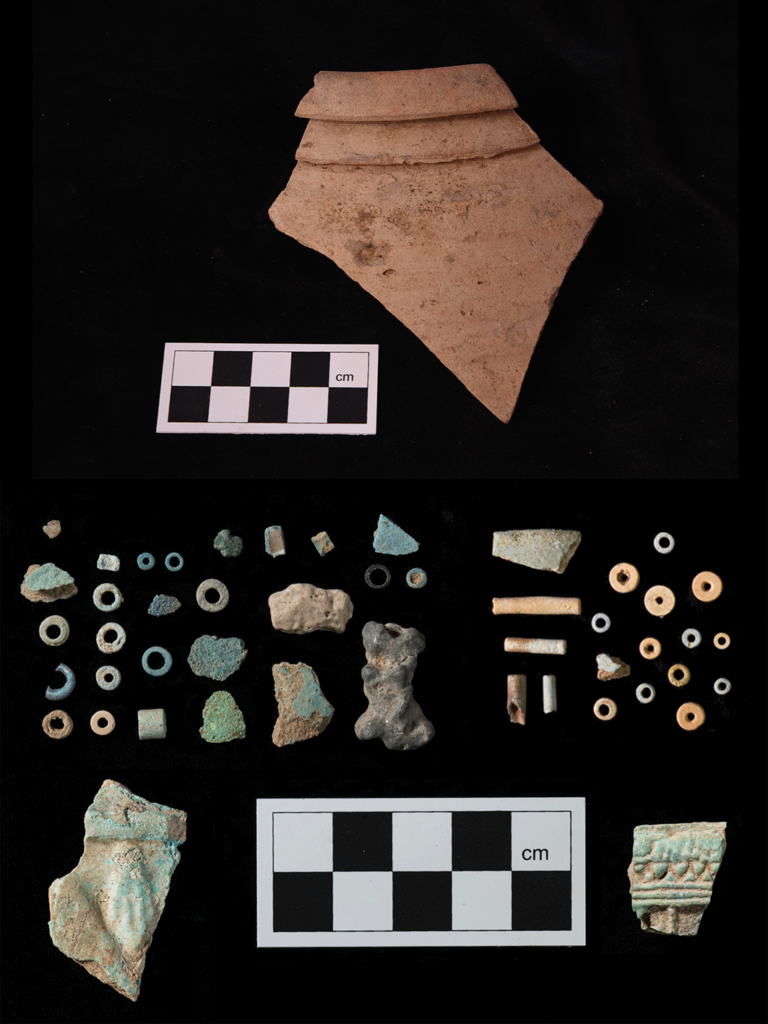
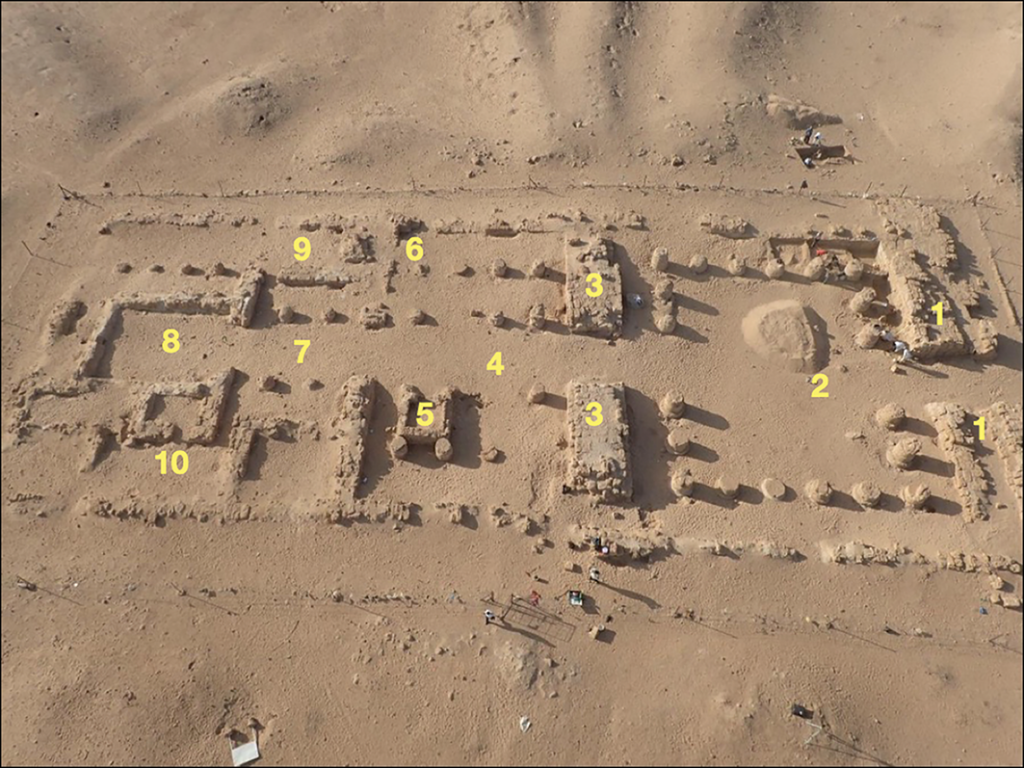
Archaeologists working immediately outside the temple’s northeastern side identified three firing pits and two mudbrick basins associated with faience production. They also found compacted ash deposits containing hundreds of blue, green, and white disk beads, fragments of vessels, and numerous pieces discarded during manufacturing. Together, these discoveries allowed the team to identify a functioning production area rather than a collection of finished objects brought to the temple.
The workers had prepared the ground with a tightly packed layer of broken pottery, particularly fragments of large storage jars, to create a stable working surface. The firing pits retained evidence of repeated heating, although the researchers could not establish whether they once supported permanent kiln structures or removable covers. Such installations could reach the approximately 900°C temperatures needed to manufacture faience.
A Small Figurine Connects the Workshop to Royal Tombs
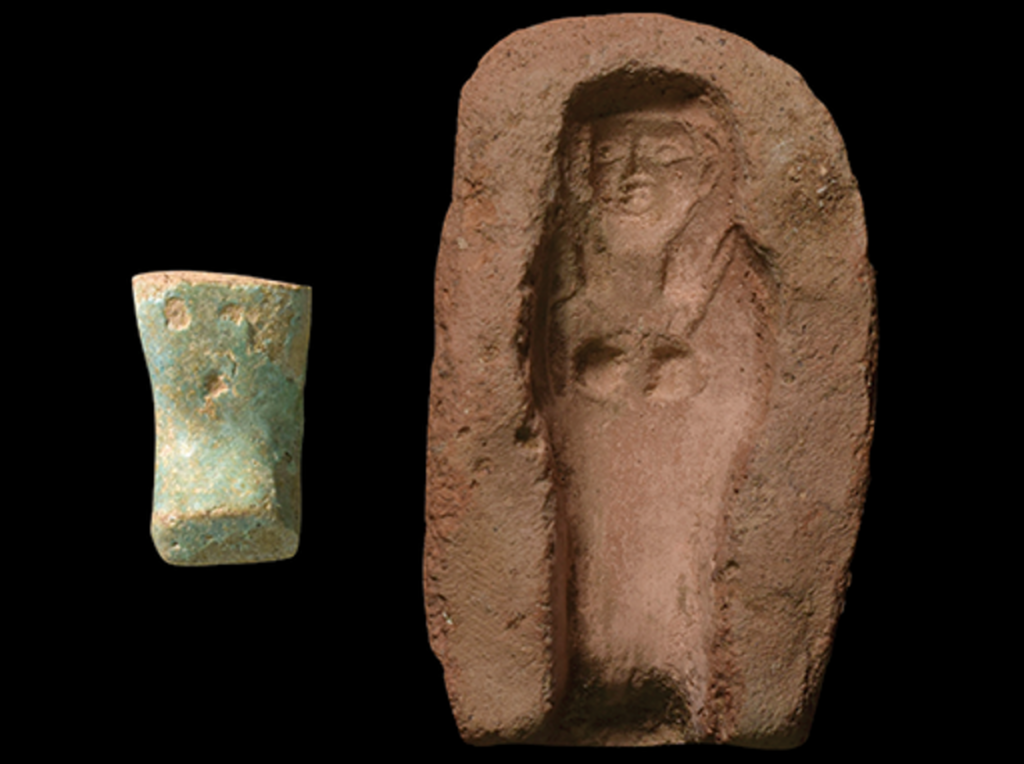
One of the most significant discoveries was a green faience shabti, a small funerary figurine associated with beliefs about life after death. In ancient Egyptian and Nubian burial traditions, shabtis represented servants who could perform work for the deceased in the afterlife. Their presence in royal graves made them important objects of both religious significance and social distinction.
The researchers found that the fragmentary figurine from the workshop matched a clay mold recovered inside Sanam Temple. Earlier excavations conducted by British archaeologist Francis Llewellyn Griffith in 1912 had also produced molds for shabtis and amulets, suggesting that craftspeople once manufactured these objects somewhere near the sanctuary.
The new discoveries confirm that production took place at Sanam. More importantly, molds recovered during Griffith’s excavations also match faience shabtis discovered by George Reisner in the royal cemetery of Nuri, where Kushite kings and members of their families were buried. The researchers therefore argue that workshops such as Sanam supplied funerary objects destined for royal tombs.
In Napatan Nubia, shabtis were reserved for royalty, unlike in ancient Egypt, where people from different social classes also placed these funerary figurines in their tombs. While Egyptians from several social groups could acquire these funerary figures, their use in Napatan Nubia appears to have been restricted to royalty. Other faience objects, including beads and pendants, circulated more widely, suggesting that access to certain products depended on social status.
Seashells and a Distinctive Kushite Manufacturing Technique
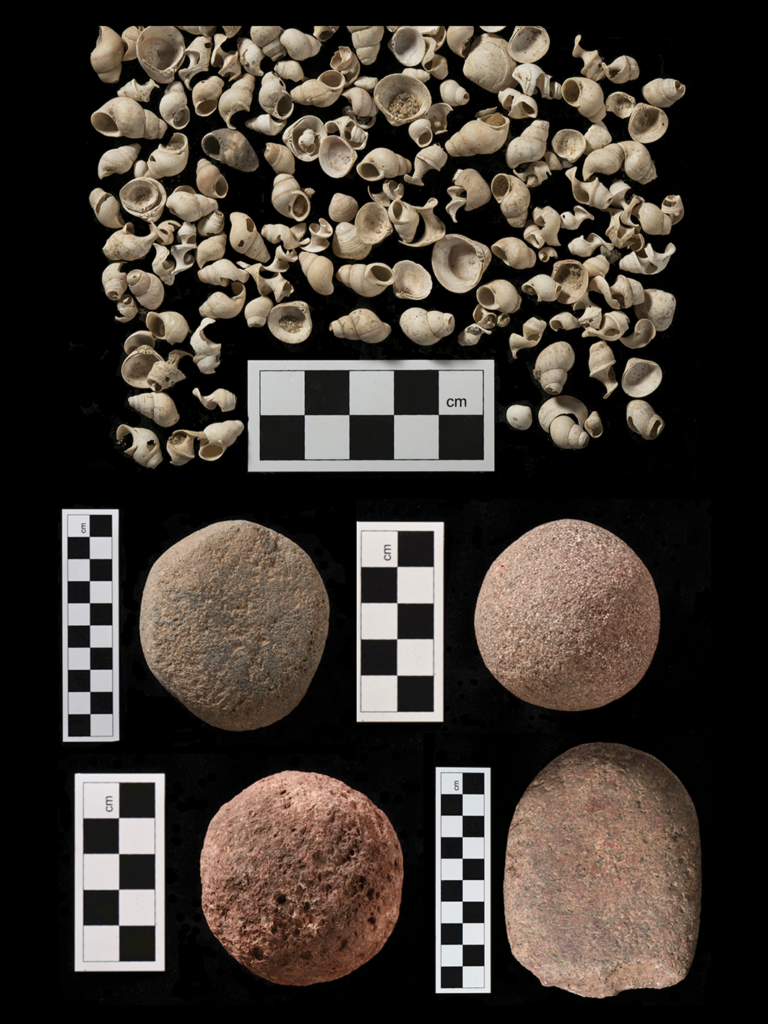
Another discovery raises questions about where the workshop obtained its raw materials. Among the ash layers, archaeologists recovered thousands of small shells alongside grinding stones and faience production debris. Their presence suggests that the craftspeople may have used shells as an ingredient rather than simply collecting them as ornaments or food remains.
Faience differs from ordinary pottery because craftspeople made it primarily from silica mixed with alkalis and lime. Heating the mixture created a glossy, glass-like surface, often colored blue or green. Although this technology was well established in ancient Egypt, the raw materials available to Kushite manufacturers were not identical.
Limestone, a potential source of lime for faience production, was relatively scarce in Sudanese Nubia. The researchers propose that Sanam’s craftspeople crushed shells to obtain calcium carbonate and added the material to their mixtures before firing. Grinding stones, mudbrick basins, and shells found together in the production deposits support this interpretation.
Some of the shells may have traveled considerable distances. The researchers identified marine bivalves likely belonging to Transkeia globosa, a species characteristic of the Red Sea, while the origins of other small shells remain uncertain. Their presence points to possible supply networks connecting Napata with the Red Sea coast, although a mixture of local Nile and marine shells cannot be ruled out.
Further analysis could clarify the precise origin and use of the shells, but the ongoing war in Sudan has prevented additional examination of the material. For now, the archaeological evidence suggests that Kushite craftspeople adapted established faience technology to local environmental conditions and the resources available through regional exchange.
Royal Power Extended Beyond the Temple Walls
The location of the workshop provides another clue to its relationship with royal authority. Faience production generated smoke and potentially unpleasant odors, making the area immediately beside a major religious sanctuary an unusual place for such activity. The researchers suggest that maintaining production close to the temple may have mattered more than avoiding these practical inconveniences.
Sanam Temple was not simply a place of worship. Its historical inscription records aspects of Taharqo’s authority, including the transfer of people and resources following political or military actions. The researchers consider it possible that people assigned to the temple participated in its economic activities, although the identities and working conditions of the faience makers remain unknown.
Control over production also extended beyond the workshop itself. Obtaining shells from distant regions, organizing manufacturing facilities, and restricting certain finished objects to the royal family would have required coordination between religious institutions and political authorities. The researchers see this as evidence that the Napatan state exercised considerable influence over parts of the economy.
This interpretation adds nuance to existing models of Kushite government, which often emphasize the importance of local rulers, personal relationships, and control over trade rather than the territorial administration associated with ancient Egypt. The Sanam workshop suggests that Kushite rulers could also organize specialized production through central institutions when valuable goods and royal interests were involved.
That does not mean every craft workshop in Kush operated under royal control. The researchers acknowledge that household producers and independent workshops may have supplied the wider population with less restricted objects, including everyday ornaments. Sanam instead illustrates how temple-sponsored production could exist alongside other economic activities while supporting the political and ceremonial needs of the ruling dynasty.
The close correspondence between the Sanam molds and the figurines from Nuri provides the clearest evidence of this relationship. Objects placed beside Kushite rulers after death were not merely expressions of religious belief; their manufacture also depended on the workshops, materials, and skilled craftspeople that sustained royal power during life.
Lemos, R., Howley, K., Shinn, S., & Abdu Rabo, S. (2026). Crafting power in Kush: faience production and state control in the Napatan region. Antiquity, 1–20. doi:10.15184/aqy.2026.10434
