
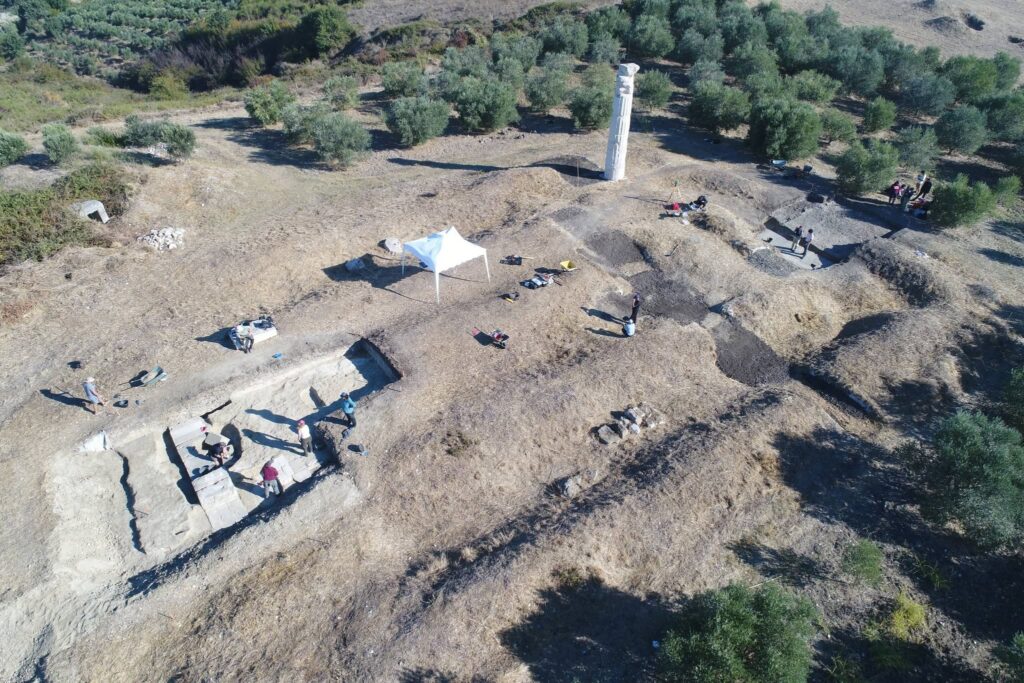
Archaeologists excavating a 2,400-year-old Greek temple in Albania have discovered coins minted at ancient Apollonia, fragments of sculpture, and roofing materials imported from Greece. The findings offer new evidence of the sanctuary’s architectural history and its connections with the wider Mediterranean world.
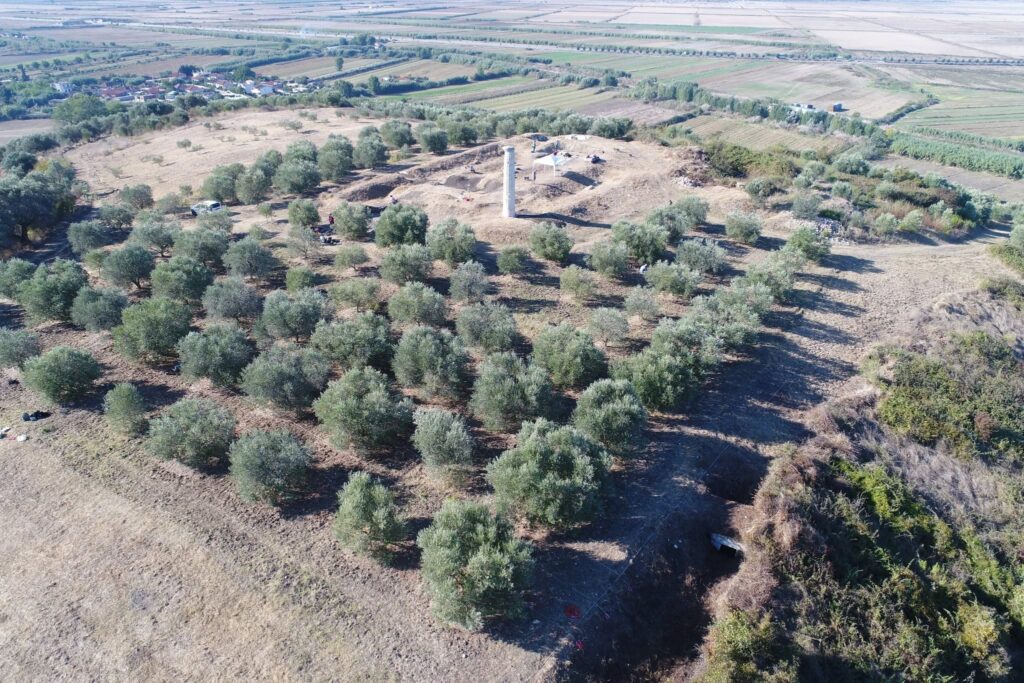
For centuries, a solitary Doric column has stood above the ancient harbor of Apollonia, marking the remains of a Greek temple whose original appearance remains largely unknown. Recent excavations at Shtyllas have begun to fill those gaps, revealing an elaborate roof constructed with materials brought from across the Ionian Sea. The discoveries also include locally minted coins that connect the sanctuary to Apollonia’s long history of producing its own currency.
An international archaeological team conducted the investigations during September and the first half of October 2026. Dr. Lavdosh Jaupaj of Albania’s Institute of Archaeology and Professor Stephan G. Schmid of Humboldt University of Berlin directed the project, which combined excavations inside the temple with surveys of the surrounding landscape.
Ancient Coins from Apollonia’s Mint
Among the discoveries were several coins minted at Apollonia, one of the most important Greek cities on the eastern Adriatic coast. The settlement developed its own monetary tradition during the fourth century BC, initially producing silver staters based on Corinthian models. It subsequently issued coins influenced by the monetary traditions of Corcyra, reflecting its historical connections with the Greek world.
Apollonia became particularly known for silver coins depicting a cow nursing her calf. The design appeared on staters and later on drachms, which the city produced in substantial quantities during the Hellenistic period. These coins circulated beyond the Adriatic coast, reaching communities across the Balkans and demonstrating the wider distribution of Apollonia’s currency.
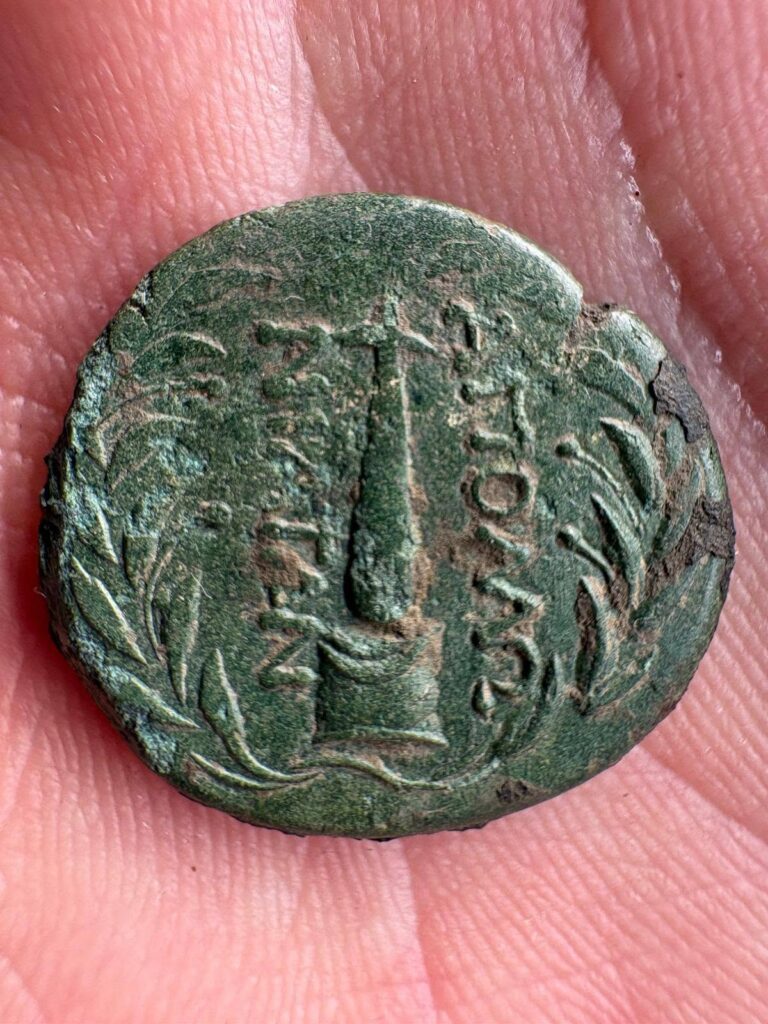
The city also minted bronze coins featuring religious imagery associated with Apollo. One specimen photographed during the Shtyllas excavations bears Greek lettering and a central object resembling the sacred obelisk of Apollo Agyieus, surrounded by a laurel wreath. Similar designs appear on known Apollonian bronze issues, including examples dated to the Hellenistic period. However, the excavators have not yet published a definitive numismatic identification or date for the newly discovered coin.
The coins provide material evidence of activity at the sanctuary, although their precise archaeological contexts and dates remain unpublished. Their presence is particularly relevant to a monument whose history extended well beyond its original construction.
Marble Roofing from Paros and Corinth
The latest excavations also produced architectural fragments that may help reconstruct one of the temple’s most distinctive features: its roof. According to the Albanian Institute of Archaeology, preliminary evidence indicates that builders used marble roof tiles from the Greek island of Paros, together with tiles imported from Corinth.
Researchers date the roof to the second half of the fifth century BC, placing its construction within the Classical period. Paros was celebrated throughout the ancient Greek world for its marble, while Corinth was an important center of architectural innovation and terracotta roofing production. The use of materials associated with both locations illustrates the resources involved in constructing a monumental sanctuary on the eastern Adriatic coast.
Archaeologists also identified roofing materials that appear to have originated locally. These probably belong to later phases of the building, when repairs or alterations changed elements of its original construction.
Excavations Around the Altar and Entrance
The archaeological team opened two trenches within the temple to examine its internal organization and architectural history. One investigation focused on the area around the altar, providing additional information about the arrangement of the sanctuary and the different phases of its use and destruction.
A second trench explored the entrance and a ramp that once provided access to the building. Although archaeologists documented further architectural remains, the evidence has not yet established how this section was originally arranged. The Institute of Archaeology emphasized that additional research is necessary before reaching firm conclusions.
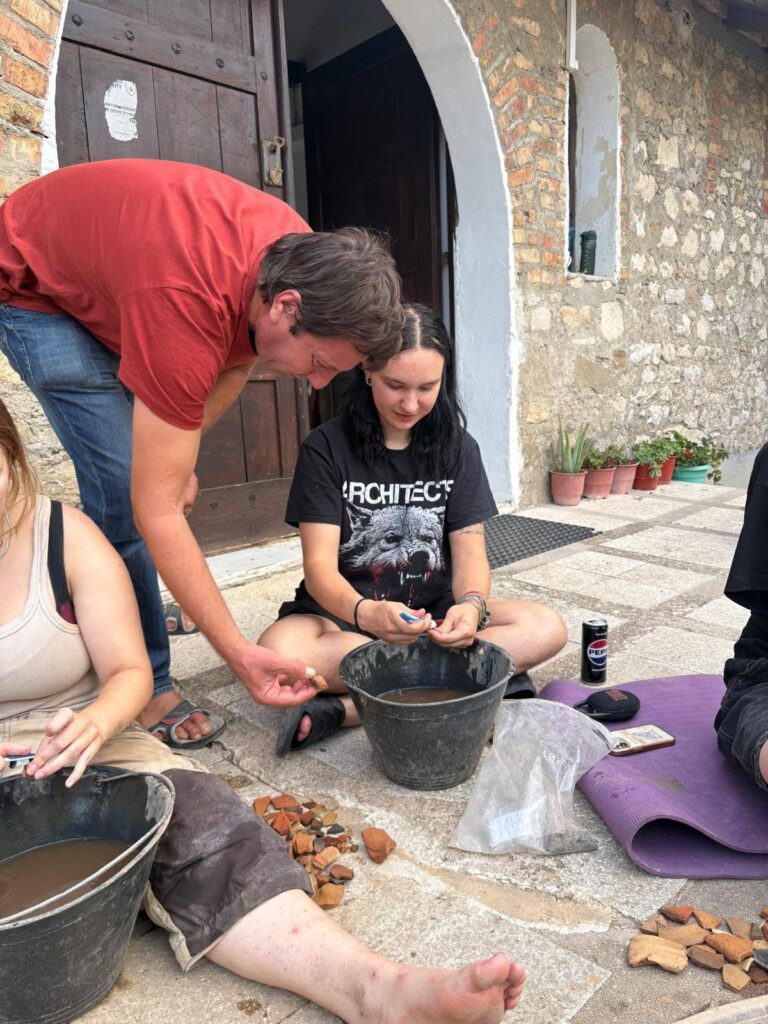
The excavations also yielded substantial quantities of pottery dating to the Classical, Hellenistic, and Roman periods, along with fragments of ancient sculptures. These finds will help researchers investigate the monument’s long history, including later activity extending into the Ottoman period.
Outside the temple, specialists conducted geophysical and geoelectrical surveys to search for buried archaeological structures. The team is still processing the results, which may help guide future investigations without disturbing the surviving remains.
A Doric Temple Above an Ancient Harbor
Shtyllas occupied a prominent position overlooking the harbor of Apollonia, a city founded by Greek settlers from Corinth and Corcyra. Apollonia developed into an important urban and commercial center along the eastern Adriatic, maintaining close links with the wider Greek world before coming under Roman influence.
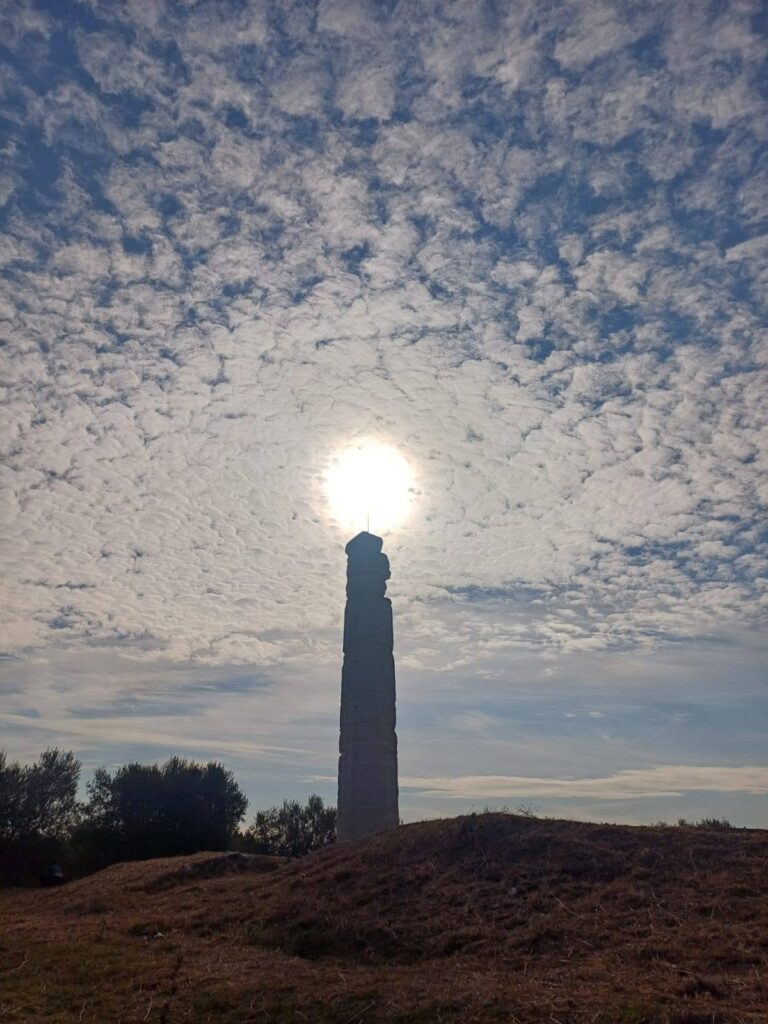
The temple stood outside the city’s main urban area, within a sanctuary that formed part of the surrounding religious landscape. Humboldt University’s archaeological project identifies its surviving column as the only upright example of Doric architecture of its kind in Albania and the eastern Adriatic region.
Despite the monument’s prominence, archaeologists have yet to reconstruct its complete architectural plan. The relationship between its inner chamber and surrounding colonnade remains under investigation, while previous research has not established the existence of an earlier temple beneath the surviving structure.
The standing column also presents conservation challenges. Protecting it from further deterioration forms an important part of the Albanian-German research project, alongside archaeological documentation and the reconstruction of the building’s original design.
The 2026 expedition brought together researchers from Albania, Germany, and Romania, with students from several European universities participating through the Erasmus program. Their work combined traditional excavation with architectural recording and non-invasive methods.
