
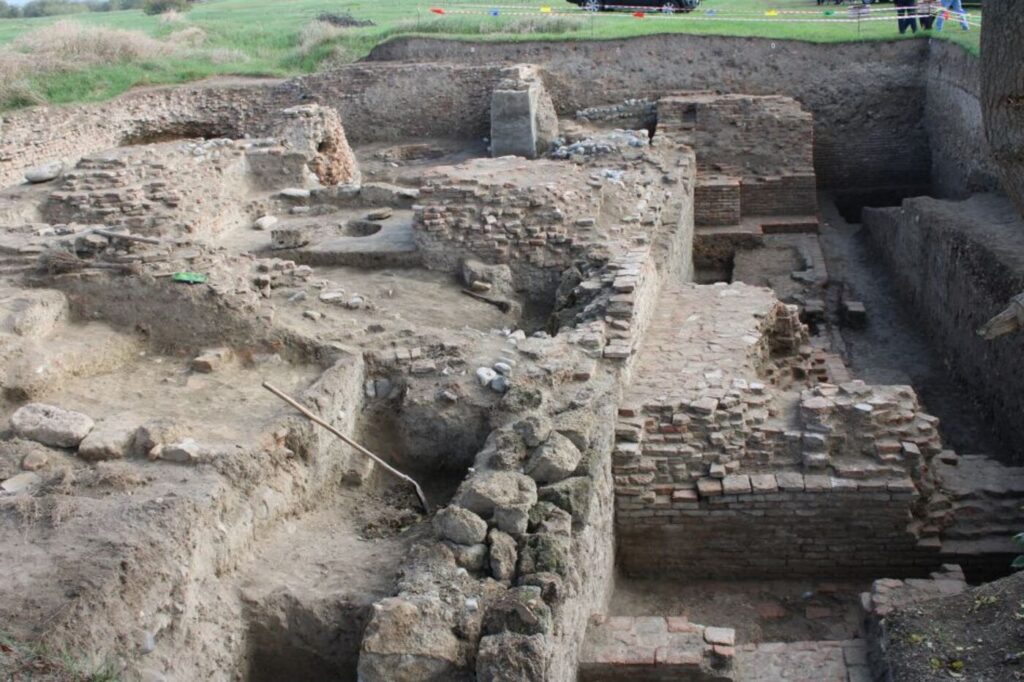
Archaeologists working in the ancient city of Gabala, once the capital of Caucasian Albania, have discovered the remains of a monumental palace-like complex. The buildings, constructed in different periods, offer new evidence of large-scale public architecture in a city whose political importance has long been known but whose administrative buildings remain poorly understood.
Despite a century of archaeological investigations at Gabala in northwestern Azerbaijan, the monumental buildings associated with the ancient city’s political administration have remained largely elusive. Now, the discovery of massive stone walls and a later brick-built structure offers archaeologists a rare opportunity to investigate how one of the Caucasus’s historic capitals organized its public and administrative spaces.
The findings emerged during the 2026 excavation season, when a team led by Professor Qafar Jabiyev expanded an earlier excavation in the city’s Qala district. The researchers identified substantial stone foundations and evidence of a second monumental building constructed partly over the earlier remains. According to the excavation team, these are the first structures of such scale documented in Gabala’s historic Qala and Salbir districts.
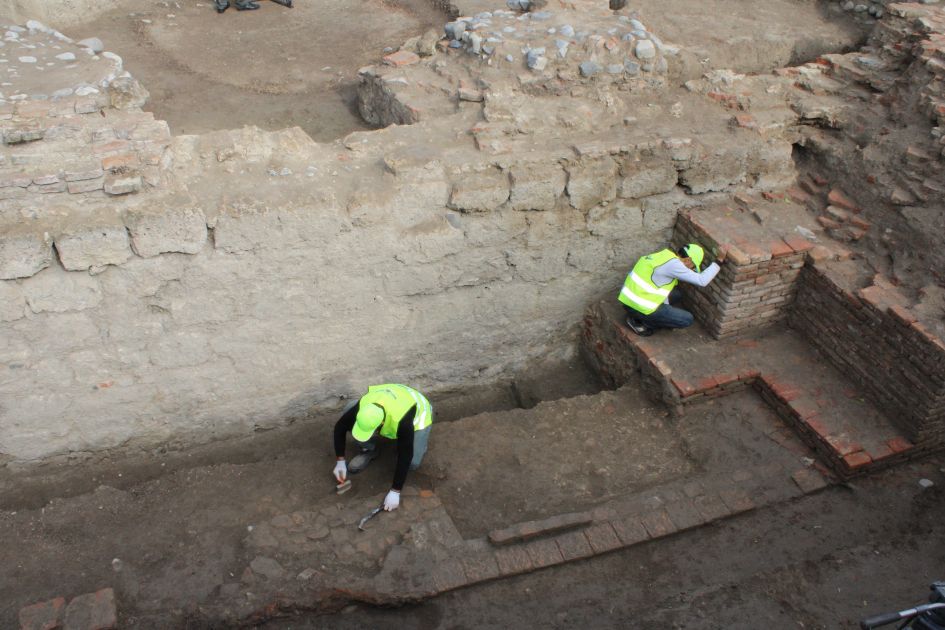
A Possible Palace in the Ancient Capital
Gabala served as the first capital of Caucasian Albania, an ancient kingdom in the eastern Caucasus. Archaeologists have investigated the city since 1926, gradually reconstructing its long history through fortifications, buildings, and everyday objects. Yet the latest discovery offers something different: potential evidence of the monumental architecture associated with the city’s political administration.
Jabiyev and his team made the discovery while expanding an excavation area first investigated by archaeologist Saleh Gaziyev during the 1960s. Earlier work had remained incomplete, leaving sections of the site unexplored for decades.
The researchers extended the excavation southward and eastward, exposing substantial walls built from large, carefully dressed stone blocks. By July, they had documented an 18-meter-long section reaching 1.8 meters in height. Because the structure continued eastward beyond the excavated area, Jabiyev believes it may form part of a considerably larger complex.
Massive Stones Point to an Ambitious Construction Project
The building’s construction materials offer one of the strongest indications of its importance.
According to Jabiyev, the surrounding area contains no known suitable source for the large stone blocks within a radius of approximately 35–40 kilometers. Workers therefore appear to have transported the material from a distant quarry, an undertaking that would have required considerable labor, planning, and resources.
Jabiyev interprets this investment as evidence that the builders may have drawn on state resources rather than those of ordinary residents. The massive masonry also distinguishes the structure from domestic buildings, strengthening his assessment that it served a significant public function.
Although these characteristics support the possibility of a palace or administrative complex, archaeologists have not yet established the building’s precise purpose.
A Second Monumental Building Replaced the First
The excavation revealed another intriguing chapter in the site’s history. Toward the end of the early medieval period, the original stone building suffered extensive destruction. Jabiyev attributes the damage to internal and external factors, although the available evidence does not yet establish exactly what happened.
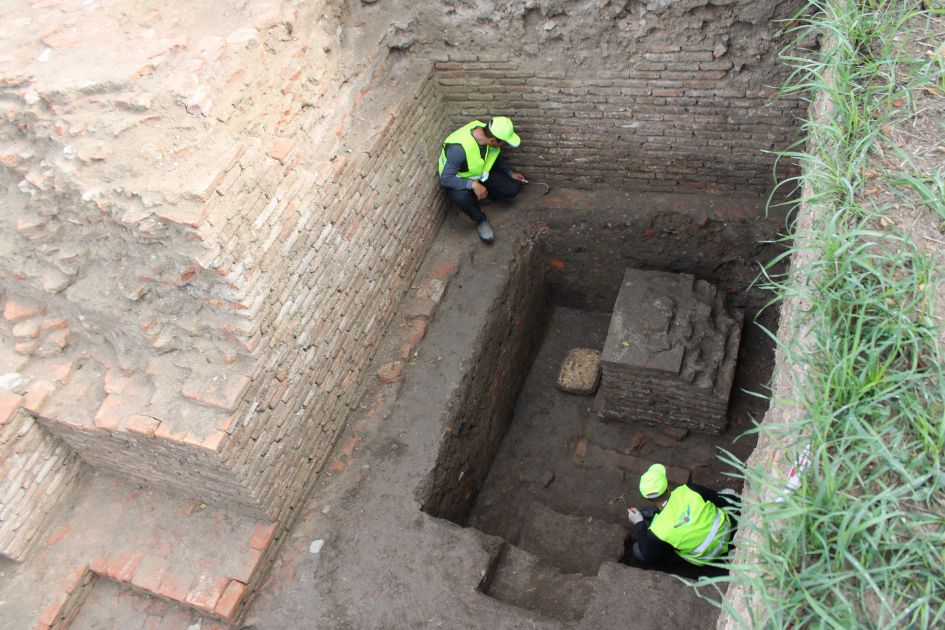
Rather than abandoning the location, later builders constructed a new and apparently more elaborate building in the late eighth or ninth century AD. They used fired bricks instead of the large dressed stones that characterized the earlier structure and incorporated parts of the old foundations into their project.
Archaeologists identified three brick platforms, a brick column, and surrounding walls made from fired bricks. These architectural features led the team to interpret the second building as another important public structure, although its exact function also remains uncertain.
The successive buildings reveal how Gabala’s inhabitants continued to develop the same prominent location across different periods. They also raise questions about whether the later structure preserved an earlier administrative role or served an entirely different purpose.
Unanswered Questions About Gabala’s Ancient Past
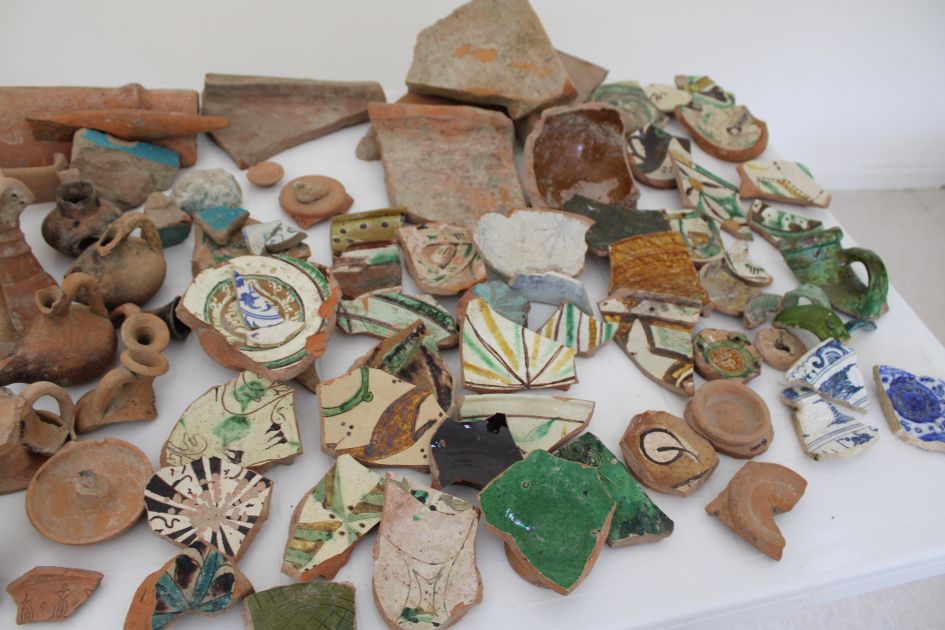
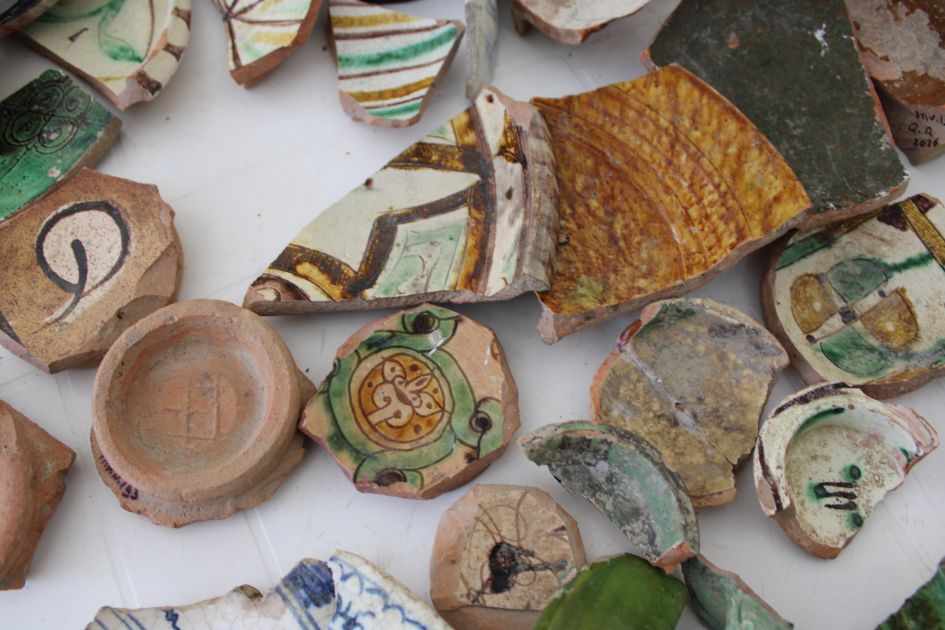
During the three-month excavation season, the team investigated approximately 500 square meters and recovered numerous artifacts alongside the architectural remains. Researcher Elmira Abbasova highlighted the discovery of construction ceramics and glazed and unglazed household vessels, which provide evidence of local craftsmanship and everyday life.
The ceramics may also help researchers explore Gabala’s commercial and cultural connections. Earlier investigations documented four construction layers extending from the early Middle Ages to the eighteenth century, demonstrating the long sequence of occupation and rebuilding at the site.
Jabiyev cautioned that the research remains at an early stage. Further excavation must establish the buildings’ chronology, architectural layout, construction characteristics, and original functions before archaeologists can reach firm conclusions about the complex.
The professor emphasized that continued investigations could clarify many unresolved questions surrounding Gabala’s 2,500-year history and the wider history of Caucasian Albania. For a city that once served as the kingdom’s capital, identifying the buildings where political and public affairs may have taken place would represent a significant advance in understanding its past.
Azerbaijan National Academy of Sciences (ANAS) – Institute of Archaeology and Anthropology
